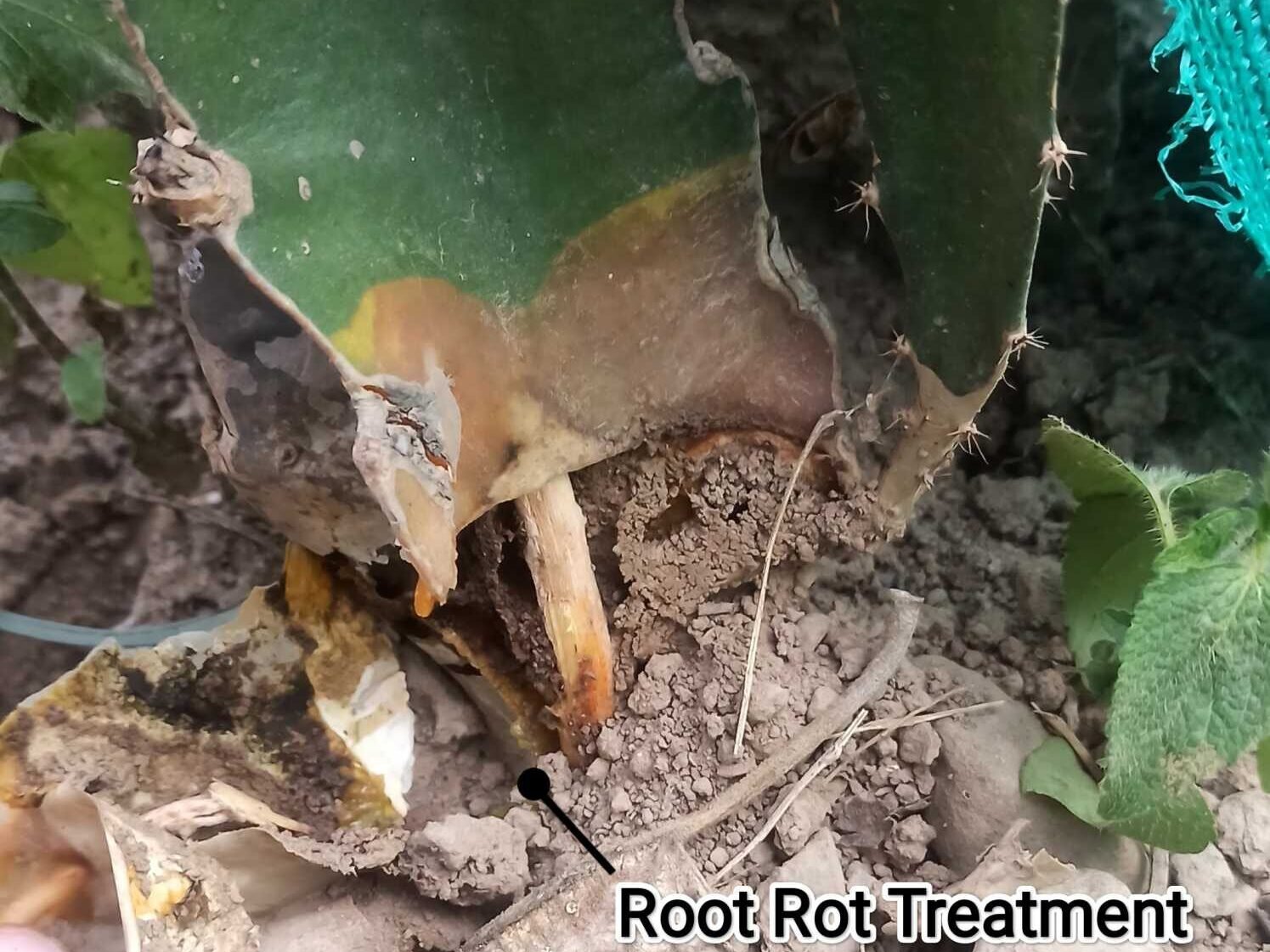
If you have been growing dragon fruit for a few seasons, you already know the plant is tough. It survives heat, poor soil, and long dry spells without much fuss. But there is one problem that quietly ruins even a well-managed farm, and that is root rot in dragon fruit. Most growers notice it too late, usually after the monsoon has already done its damage.
This article is based on real field observations, not just theory copied from a textbook. I am sharing what actually happens in the soil, why root rot in dragon fruit develops, and what has worked to bring it under control.
What Exactly Is Root Rot in Dragon Fruit?
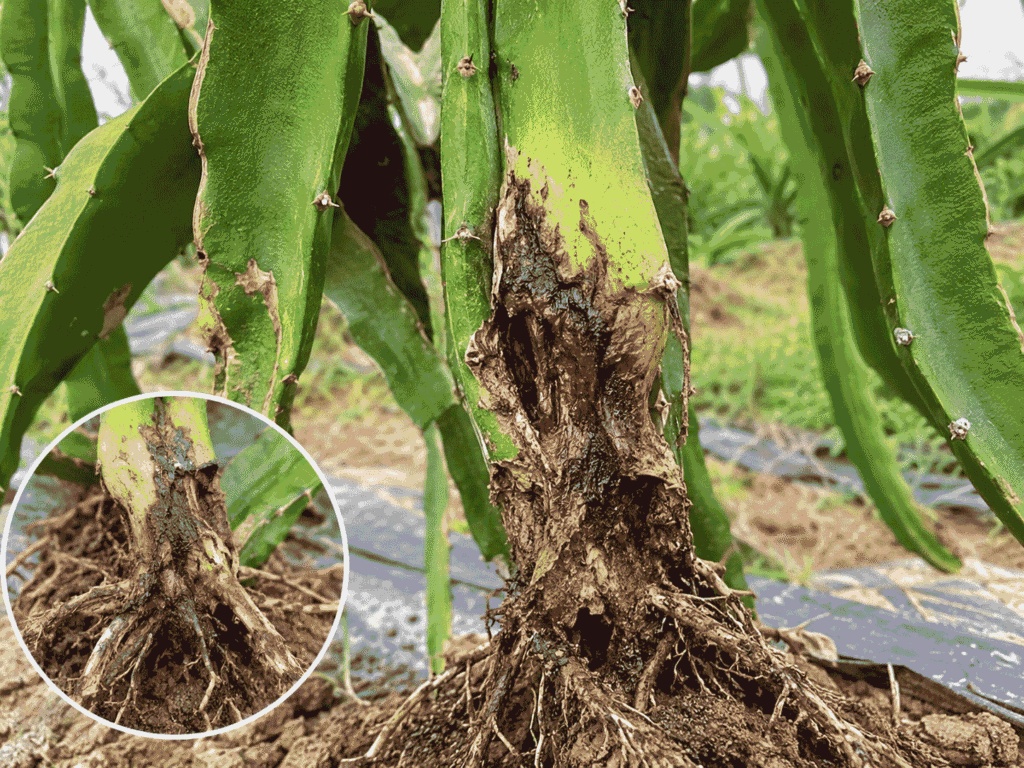
In simple words, this is what farmers commonly call “jad galan.” It is caused by fungus attacking the root system of the plant. Unlike many other plant diseases that show up on leaves or fruit first, root rot in dragon fruit usually starts from below, right at the base near the soil line, and only becomes visible above ground once the damage is already serious.
You will typically see this problem showing up during or right after the rainy season. That timing is not a coincidence. It is directly connected to how the soil behaves when it gets wet for extended periods.
Why Does Root Rot Actually Happen?
There is no single reason for root rot in dragon fruit, but a few factors show up again and again on farms that struggle with it:
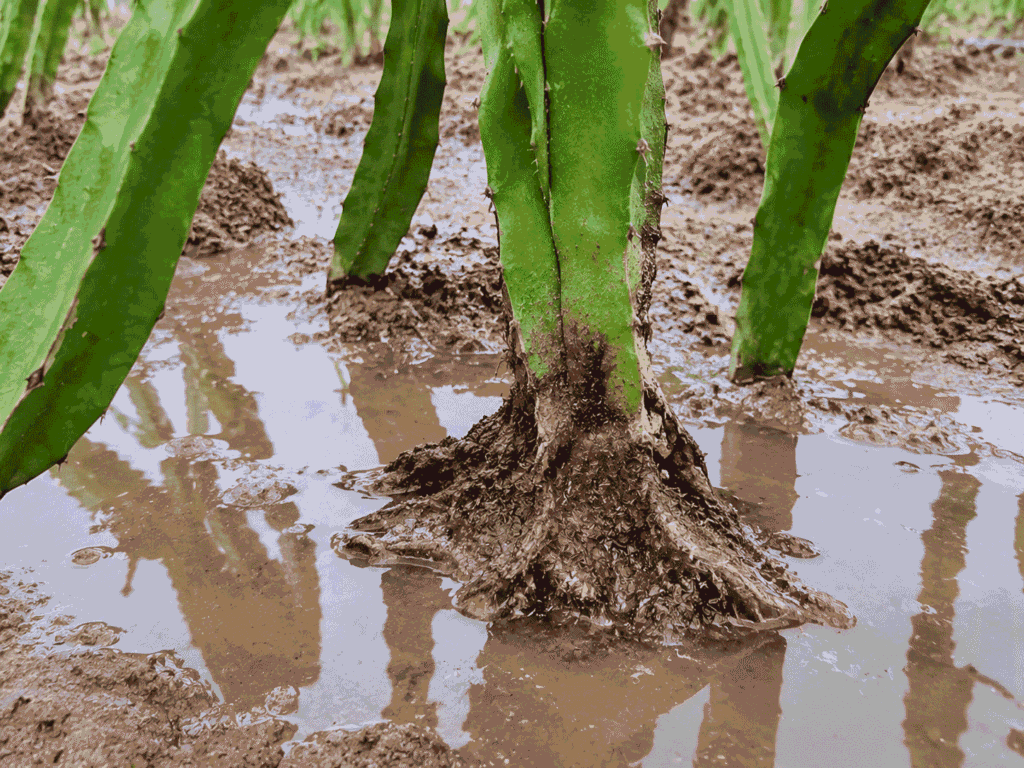
- Poor drainage — the single biggest reason behind root rot in dragon fruit. Dragon fruit is a climbing cactus. It leans on poles and support structures rather than spreading its roots wide and deep into the ground the way a mango or guava tree would. Because of this, the root zone stays fairly shallow and compact, so it does not take much standing water to stress it out.
- Untreated fungus building up over seasons — In fields I have worked with, wherever the fungus behind root rot was not properly managed in one season, the problem did not stay the same the next year, it got worse. The fungal population keeps building up in the soil if nothing is done to break the cycle.
- High phosphorus soil — This one surprises a lot of growers. Soil with excess phosphorus tends to show a higher rate of root rot complaints. Farms that keep pushing phosphorus-heavy fertilizers without checking actual soil requirement usually end up dealing with more root disease pressure over the years.
Out of these three, drainage deserves a bit more explanation because it is the root cause behind most cases. When water collects around the base even for a short time, oxygen supply to the roots drops sharply, and that stressed condition is exactly what fungus needs to attack. This is why bed design matters so much at the time of planting. Build raised beds properly right from day one, and water will not sit around the base no matter what the weather brings later. Fixing drainage after the plant is already established is far harder than getting it right during planting.
Why It Happens vs. What Actually Fixes It
Since a lot of readers just want a quick summary before reading the full explanation, here is the whole picture in one place.
| Cause | What Actually Fixes It | When to Apply |
|---|---|---|
| Poor drainage / waterlogging | Raised beds built at planting, drainage channels | At planting time; check every week in monsoon |
| Fungus building up season after season | Trichoderma and Pseudomonas colonies in soil | With manure, then monthly via drip in monsoon |
| High phosphorus in soil | Phosphorus solubilizing bacteria, reduce chemical phosphorus dose | Ongoing, alongside regular fertigation |
| Low organic matter in soil | Compost / farmyard manure | Every season, before monsoon |
| Weeds holding moisture near base | Regular weeding around poles | Every 2 weeks during rains |
How to Control and Prevent Root Rot in Dragon Fruit
Now let us get into the part that actually matters, what you can do about it.
Improve the Organic Content of Your Soil
This is the foundation of everything else. Soil that is rich in organic matter naturally supports a healthier root environment and reduces disease pressure across the board. If your soil is mostly hard, compact, and low in organic content, the plant’s roots are already under stress before any fungus even shows up.
- Add well-decomposed compost or farmyard manure every season
- This improves drainage at a micro level, not just on the surface
- Gives roots a better natural chance to resist infection
Use VAM (Vesicular Arbuscular Mycorrhiza)
VAM is a beneficial fungus that forms a partnership with plant roots. It helps roots absorb nutrients more efficiently and strengthens the overall root system, which makes the plant less vulnerable to this fungal attack.
- Mix into soil during land preparation, or
- Apply around the root zone during the growing season
- Low cost, and the benefit builds up over time
Bring in Phosphorus Solubilizing Bacteria
Since high phosphorus levels are linked with more root rot cases, one smart move is introducing phosphorus solubilizing bacteria into the soil. These bacteria convert phosphorus into a form the plant can actually use, instead of letting it accumulate and get fixed in the soil where it does more harm than good. This directly targets the excess phosphorus problem mentioned earlier.
Shift From Chemical to Organic Fertilizer as Much as Possible
This does not mean going one hundred percent organic overnight if that is not practical for your operation. But wherever you can reduce chemical fertilizer use and replace it with organic alternatives, do it. Heavy chemical dosing, especially phosphorus-based fertilizers, adds to the exact soil condition that encourages this problem. A gradual shift toward organic inputs supports better long-term soil health.
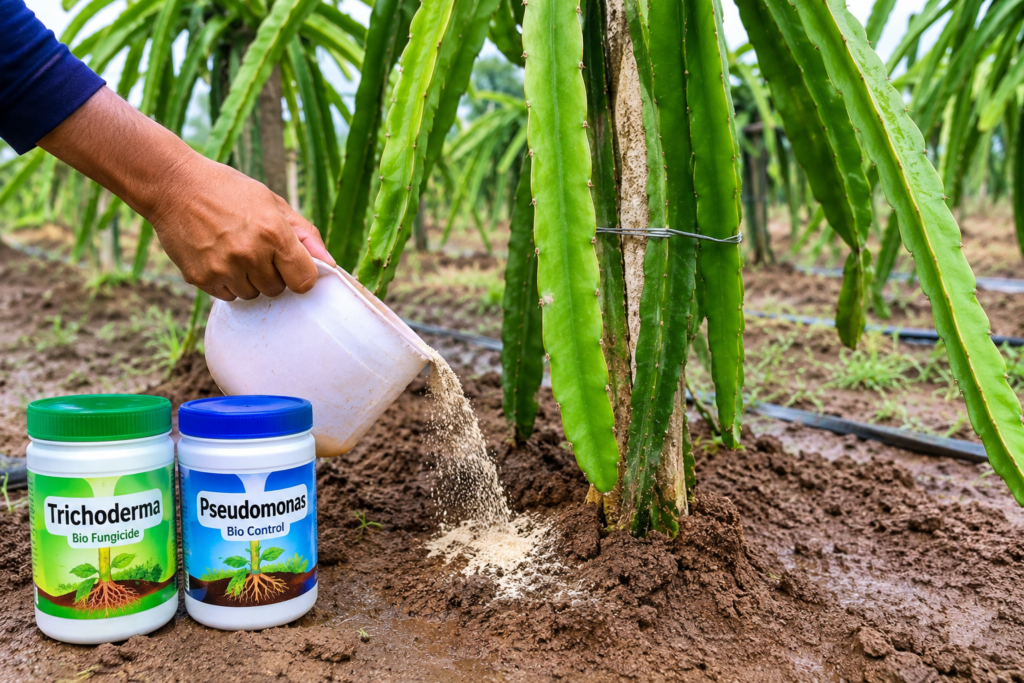
Build Colonies of Trichoderma and Pseudomonas in the Soil
These two are beneficial microorganisms that work against harmful soil fungus, acting almost like natural bodyguards for the root zone by competing with and suppressing the fungus responsible for root rot in dragon fruit.
- Apply along with your regular manure application
- During monsoon, send a dose through your drip irrigation system once a month
- This keeps a fresh, active supply of beneficial organisms in the soil exactly when disease pressure is at its highest
Do Not Ignore Weed Management During Monsoon
Weeds around the base of the plant hold extra moisture, block airflow near the root zone, and create a favourable environment for fungus to thrive. Keeping the area around your dragon fruit poles clean during the rainy season is a simple step that is often skipped, but it makes a real difference in keeping the fungus under control.
A Simple Monsoon Routine for Prevention
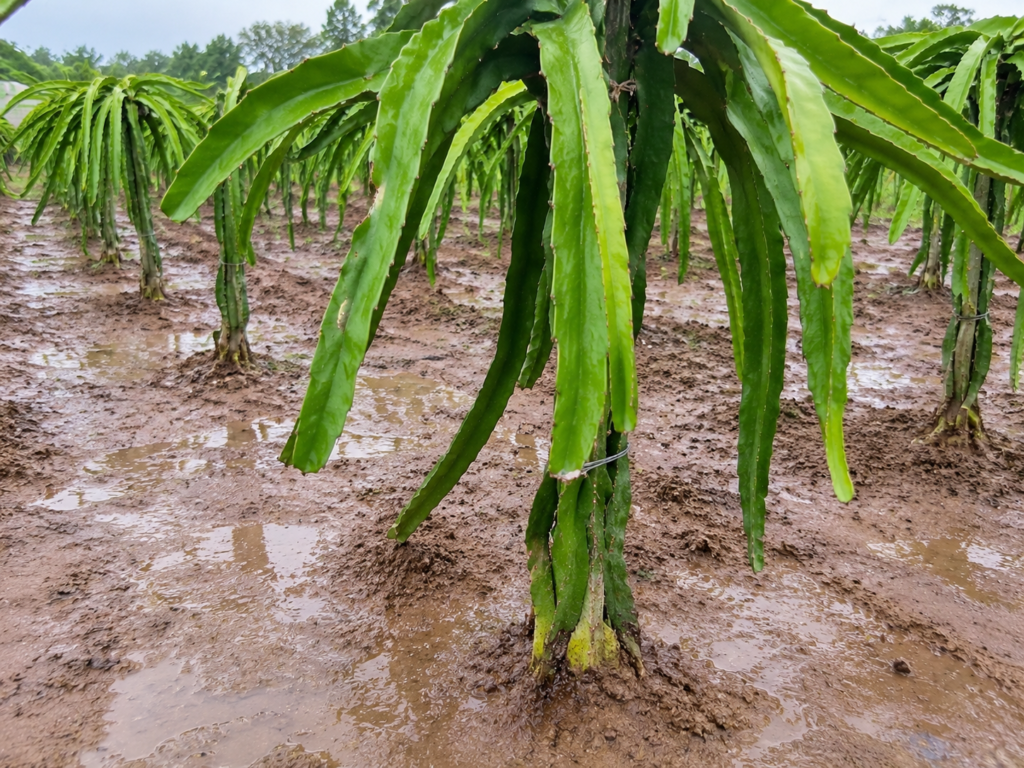
A lot of growers ask me directly how to prevent root rot in dragon fruit without turning it into a full-time job. The truth is, you do not need a complicated schedule, just a short routine that you actually stick to every monsoon:
- Walk your rows once a week during the rainy months. You are not looking for disease symptoms at this stage, you are looking for water. If puddles form near the base even a few hours after rain stops, that spot needs attention before it becomes a bigger issue. Sometimes a small channel cut through the bed is enough.
- Fix a monthly date for Trichoderma and Pseudomonas application through the drip line during monsoon, rather than doing it only when you remember. Growers who treat this as a routine task, the same way they treat regular fertigation, get far more consistent results.
- Clear weeds from around the base every couple of weeks in the rainy season. This alone removes one of the easiest conditions for fungus to settle in.
- Review your fertilizer program. If you are still using heavy phosphorus doses out of habit rather than actual soil test results, that is worth changing. Reducing unnecessary phosphorus input, along with phosphorus solubilizing bacteria, is one of the most overlooked long-term fixes, not just for one season but for the full 20 to 25 year life of the plantation.
None of these four steps take much time individually. Together, they build a habit that keeps your farm ahead of the problem instead of reacting to it after the damage is already visible.
Putting It All Together
If there is one thing to take away from this, it is that root rot in dragon fruit is not something that appears out of nowhere. It builds up from a combination of poor drainage, untreated fungal buildup over seasons, and soil chemistry that leans too heavily on phosphorus. The good news is that every one of these causes has a practical solution: raised beds at planting, organic matter in the soil, VAM, phosphorus solubilizing bacteria, a gradual move toward organic fertilizers, regular use of Trichoderma and Pseudomonas, and proper weed control during monsoon.
None of these steps are complicated or expensive on their own. What actually matters is doing them consistently, season after season, instead of reacting only after the plant is already showing signs of stress.
FAQ
1. What causes root rot in dragon fruit? It is mainly caused by soil fungus that attacks the root system, and it becomes active when drainage is poor and roots stay in waterlogged conditions for too long.
2. In which season does this problem occur the most? It is most common during and right after the monsoon, when soil moisture stays high for extended periods.
3. Can root rot in dragon fruit be treated once it starts? Yes, but early action matters a lot. Improving drainage, applying Trichoderma and Pseudomonas, and reducing excess moisture around the root zone can help control it before it spreads further.
4. Does soil type affect how badly a plant gets root rot? Yes. Heavy soil with poor drainage and soil high in phosphorus both increase the risk.
5. Why is drainage so important for dragon fruit plants? Dragon fruit has a shallow root zone since it depends on poles for support. Standing water around this small root zone quickly creates stress and opens the door for fungal attack.
6. What is VAM and how does it help? VAM is a beneficial fungus that partners with the plant roots to improve nutrient absorption and overall root strength, making the plant less prone to root rot.
7. How often should Trichoderma and Pseudomonas be applied? They can be added along with manure application, and then given once a month through drip irrigation during the monsoon season.
8. Does using too much chemical fertilizer increase the risk of root rot? Heavy use of chemical fertilizer, particularly phosphorus-based ones, can add to soil conditions that make root rot more likely. Shifting toward organic inputs helps reduce this risk.
9. Can raised beds really prevent root rot in dragon fruit? Yes. Raised beds built at the time of planting keep water from collecting around the roots, which is one of the most effective long-term prevention steps.
10. Is weed management related to root rot? Yes. Weeds trap extra moisture around the base of the plant and reduce airflow, which creates a favourable condition for fungus, especially during the rainy season.
11. Does root rot get worse every year if left untreated? In many fields, yes. Fungal populations tend to build up season after season if the problem is not managed consistently.
12. What are the early signs of root rot in dragon fruit? Since the disease starts near the base and roots, visible symptoms on top often appear only after the damage has already progressed, which is why prevention matters more than waiting for symptoms.
13. Can organic farming reduce root rot problems? Farms that maintain higher organic matter in their soil generally report fewer disease issues, since organic-rich soil supports a healthier root environment overall.
14. Is phosphorus solubilizing bacteria safe to use regularly? Yes, it is a natural soil input that helps convert phosphorus into a usable form for the plant and can be used as part of a regular soil health routine.
15. Should new dragon fruit growers worry about root rot from day one? Yes. The most effective prevention step, building proper raised beds and good drainage, needs to happen at planting time, not after problems appear.