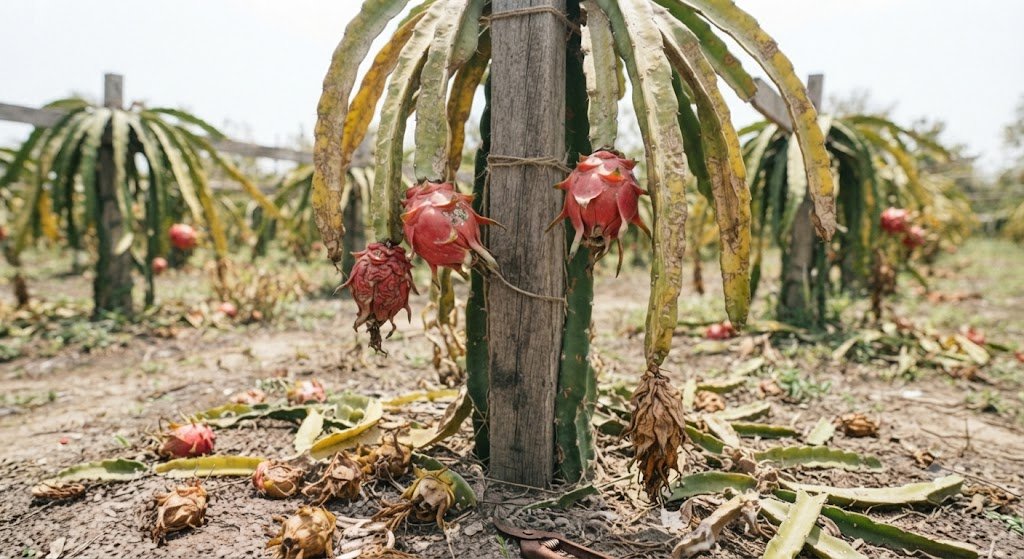
As the autumn winds start carrying a sharp chill, dragon fruit growers face a critical transition period. If you walk into a pitaya orchard right now, you will notice a tired, exhausted ecosystem. After pumping out fruit continuously for 5 to 6 months during the long summer and monsoon seasons, the plants are completely spent. Their energy reserves are drained from the final fruiting wave, dragon fruit winter care leaving them vulnerable just as plunging temperatures and heavy morning dews start rolling in.
If you ignore your orchard at this exact juncture, winter will hit your plants hard. Fungal outbreaks, stem rot, and severe stress can destroy months of hard work. To protect your crop, you need a proactive, step-by-step pre-winter management strategy.
In this first part of our comprehensive winter care series, we will break down the exact field-tested protocol—from reviving exhausted stems and running an advanced preventive fungicide schedule to precise pruning and soil health restoration.
The Reality of Post-Harvest Exhaustion in Dragon Fruit
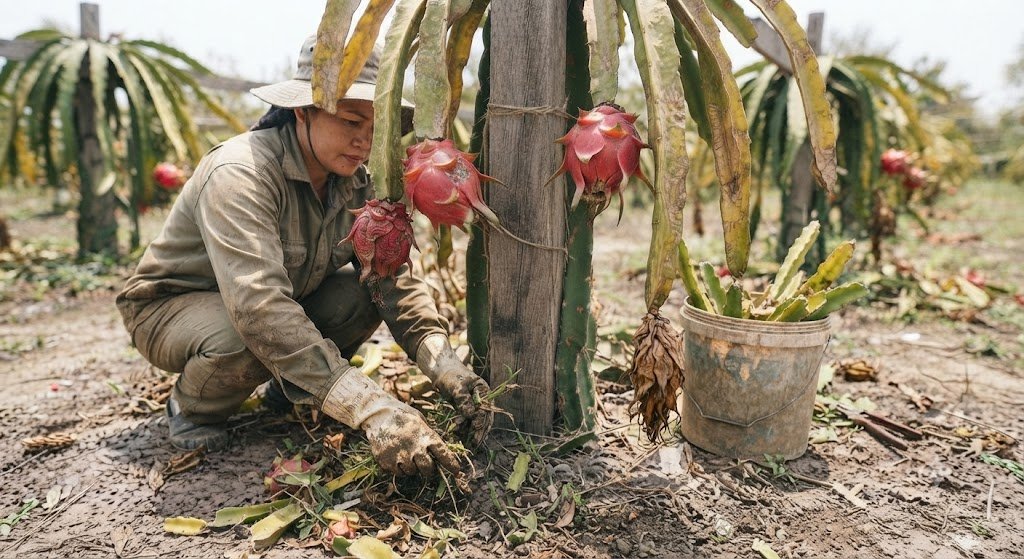
During the active production months, a dragon fruit vine dragon fruit fungicide schedule behaves like a high-performance athlete running a marathon without stopping. By the time the final flush of fruit is harvested, the stems have channeled nearly all their carbohydrates, potassium, and micronutrients into fruit development.
- Nutritional Depletion: The inner core of the stems becomes slightly softer, and the green exterior loses its vibrant, waxy sheen.
- Immune System Vulnerability: An exhausted plant cannot fight off pathogens efficiently. When temperature fluctuations (warm days followed by freezing or chilly nights) begin, condensation settles on the stems. This creates an ideal breeding ground for fungal spores.
- The Danger Zone: Without intervention, opportunistic fungi quickly invade the stressed tissues, leading to yellowing, black spots, and rotting stems that can permanently damage the framework of your plants.
To reverse this exhaustion before winter locks in, professional growers follow a precise sequence of foliar nutrition, systemic disease protection, structural pruning, and soil microbiome defense.
Step 1: Reviving Exhausted Vines with Balanced Nutrition (19:19:19)
The very first move you should make before winter fully sets in is giving your plants a metabolic kickstart. Because the vines are exhausted from months of continuous fruiting, they need an immediate, easily absorbable source of balanced nourishment.
- The Action: Spray a balanced water-soluble dragon fruit fungicide schedule fertilizer containing equal parts nitrogen, phosphorus, and potassium (19:19:19) directly onto the stems.
- Why It Works: 19:19:19 acts as an instant restorative tonic. Nitrogen helps restore basic green tissue vitality, phosphorus stimulates root recovery and internal cellular repair, and potassium thickens the cell walls, helping the plant brace for cold stress.
- Expert Tip: Spray early in the morning when stomata are open, ensuring maximum foliar absorption before the sun gets too intense.
Step 2: Running an Advanced Preventive Spray Schedule
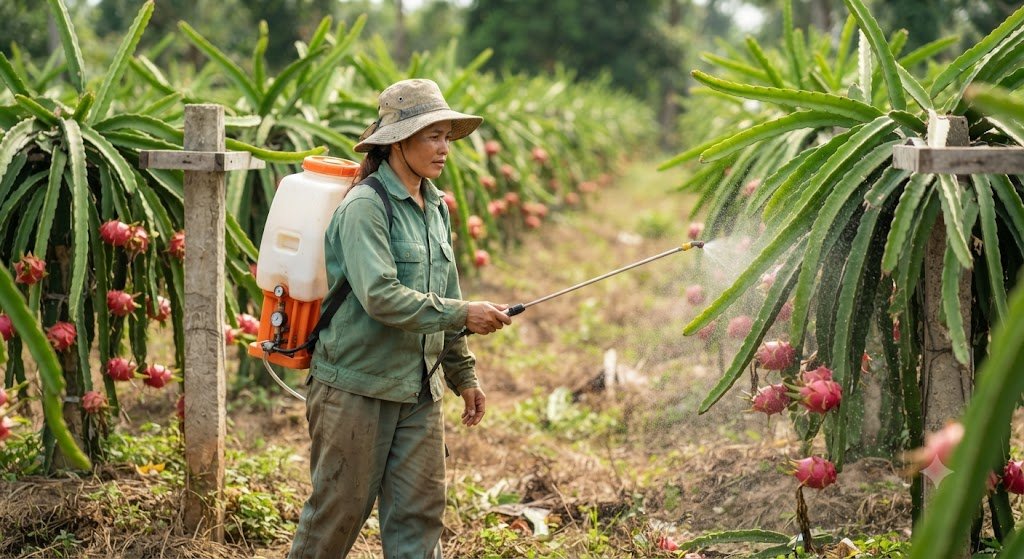
Once the plant has regained some structural stamina from your initial nutritional spray, you must secure the orchard against the incoming wave of winter fungi. dragon fruit fungicide schedule Waiting for fungal symptoms to appear in winter is a fatal mistake; dragon fruit fungicide schedule by the time you see black spots, the infection has already penetrated deep into the stem tissues.
A robust, multi-layered preventive spray schedule includes systemic fungicides, protective contact fungicides, amino acids, and magnesium sulphate.
A. Systematic Fungicide Rotations
Alternate between two powerful systemic fungicides to prevent the buildup of resistance in local pathogen strains:
- Options: Use high-grade systemic choices like Nativo, Amistar Top, or Spectrum.
- Application Gap: Maintain a strict 5-day gap between these sprays. Systemic fungicides absorb into the plant tissue, protecting the vine from the inside out against latent infections trying to take hold in cooling weather.
B. Protective Contact Fungicide Backup
- The Action: Follow up with a reliable copper-based contact fungicide, specifically Copper Oxychloride.
- Why It Works: While systemic options fight internal threats, copper oxychloride sits on the surface of the stem, acting as an impenetrable chemical shield against wind-borne and dew-borne fungal spores.
C. Stress Mitigation with Amino Acids and Magnesium Sulphate
Weather changes cause intense physiological stress in pitaya plants. To mitigate this, integrate supportive foliar inputs between your main fungicide treatments:
- Magnesium Sulphate Spray: Apply a magnesium spray exactly 3 days after your main fungicide application. dragon fruit fungicide schedule Magnesium is the central atom in chlorophyll; boosting it keeps the stems photosynthetically active even as daylight hours shorten.
- Amino Acid Spray: Rotate with amino acid foliar sprays on subsequent cycles. Amino acids act as immediate anti-stress agents, helping the plant adapt smoothly to shifting thermal gradients without dropping green mass.
Step 3: Strategic Pruning for Optimal Air Ventilation
Dense canopies trap moisture, and stagnant moisture during cold winter nights is an open invitation for stem rot and anthracnose. Before winter sets in, you must thin out the growth architecture.
- Removing Extra Shoots: Walk down every row and cut away dense, overlapping, or unproductive secondary shoots that crowd the main pillars or trellises. Good air ventilation is your natural defense system against dampness.
- Pruning New Immature Shoots: This is a crucial rule for cold weather management—prune away all new, tender, immature shoots. Fungus and frost attack tender, soft-skinned growth first because their cell walls are thin and watery. Mature, thick, waxy stems resist cold snaps and fungal penetration far more easily. Sacrifice the weak growth now to protect the structural main stems.
Step 4: Orchard Sanitation and Debris Clearance
A clean orchard is a disease-free orchard. Once your pruning is complete, your work on the ground is just beginning.
- Clearing Fallen Debris: Clean up all the cut shoots, fallen leaves, and pruned debris lying in the pathways and around the base of the pillars.
- Why It Matters: Fungal pathogens love to dragon fruit winter care overwinter in decaying plant matter on the ground. Leaving pruned shoots on the soil provides a breeding ground for spores that will splash back onto your healthy plants during winter rains or heavy dews. Rake everything out and burn or compost it far away from the production zones.
Step 5: Root Zone Sanitization with Jaggery and Trichoderma
While above-ground management gets a lot of attention, true winter defense starts right at the roots in the soil. Cold, damp winter soil slows down dragon fruit fungicide schedule root activity, allowing soil-borne pathogens like Fusarium and Phytophthora to attack the root crown.
- The Action: Prepare a biological drench using Trichoderma combined with Jaggery (Gur). Dissolve high-quality organic jaggery in water to act as an immediate food source and carbon multiplier for beneficial fungi, then mix in a generous colony of Trichoderma viride or harzianum.
- Application: Spray or drench the soil around the base of the plants using 1 to 2 full sprayer tanks across your field.
- Why It Works: The jaggery supercharges the population explosion of Trichoderma, which aggressively colonizes the root zone, outcompetes harmful pathogenic fungi, and completely eliminates the risk of root rot at the maximum level.
Summary Checklist: Your Pre-Winter Action Plan
| Step | Management Focus | Key Input / Action | Purpose |
|---|---|---|---|
| 1 | Nutritional Revival | Foliar spray of $19:19:19$ | Restores internal energy after months of heavy fruit exhaustion. |
| 2 | Systemic Protection | Nativo, Amistar Top, or Spectrum (5-day gaps) | Neutralizes hidden internal fungal threats before cold sets in. |
| 3 | Stress & Chlorophyll | Magnesium Sulphate & Amino Acids | Reduces environmental stress and maintains stem greenness. |
| 4 | Structural Hygiene | Removal of immature shoots & dense growth | Maximizes air ventilation and eliminates vulnerable soft tissue. |
| 5 | Surface Shielding | Copper Oxychloride spray | Provides a protective external barrier against winter dews. |
| 6 | Soil Microbiome | Jaggery + Trichoderma soil drench | Eradicates soil-borne fungal risks and protects the root crown. |
Expert Insights & Grower Tips
“Many farmers make the mistake of applying high-nitrogen fertilizers in late autumn to force quick green growth. In dragon fruit farming, this is a disaster. Tender shoots forced late in the season will turn into mush the moment a light frost touches them. Focus entirely on hardening existing mature stems through potassium-rich support and biological defense.” — Senior Pitaya Agronomist
Frequently Asked Questions (FAQs)
Q1: Can I apply organic manure to the soil right before winter?
A: It is better to apply well-rotted Farm Yard dragon fruit winter care Manure (FYM) or vermicompost after your soil drench with Trichoderma. Avoid raw or unfermented manure during winter, as cold wet soil slows decomposition, attracting white ants and root-rotting fungi.
Q2: Why is magnesium sulphate necessary during the winter spray schedule?
A: Cold temperatures inhibit nutrient uptake from the roots. Spraying magnesium sulphate directly onto the stems bypasses the cold root zone, keeping chlorophyll dragon fruit fungicide schedule stable and preventing yellowing caused by thermal shock.
Q3: What should I do if a sudden frost warning is issued for my area?
A: In addition to your preventive fungicide and nutrition schedule, rig up temporary white shade nets dragon fruit winter care or plastic frost covers over your trellis structures at night to trap radiant ground heat and protect the terminal tips from freezing.