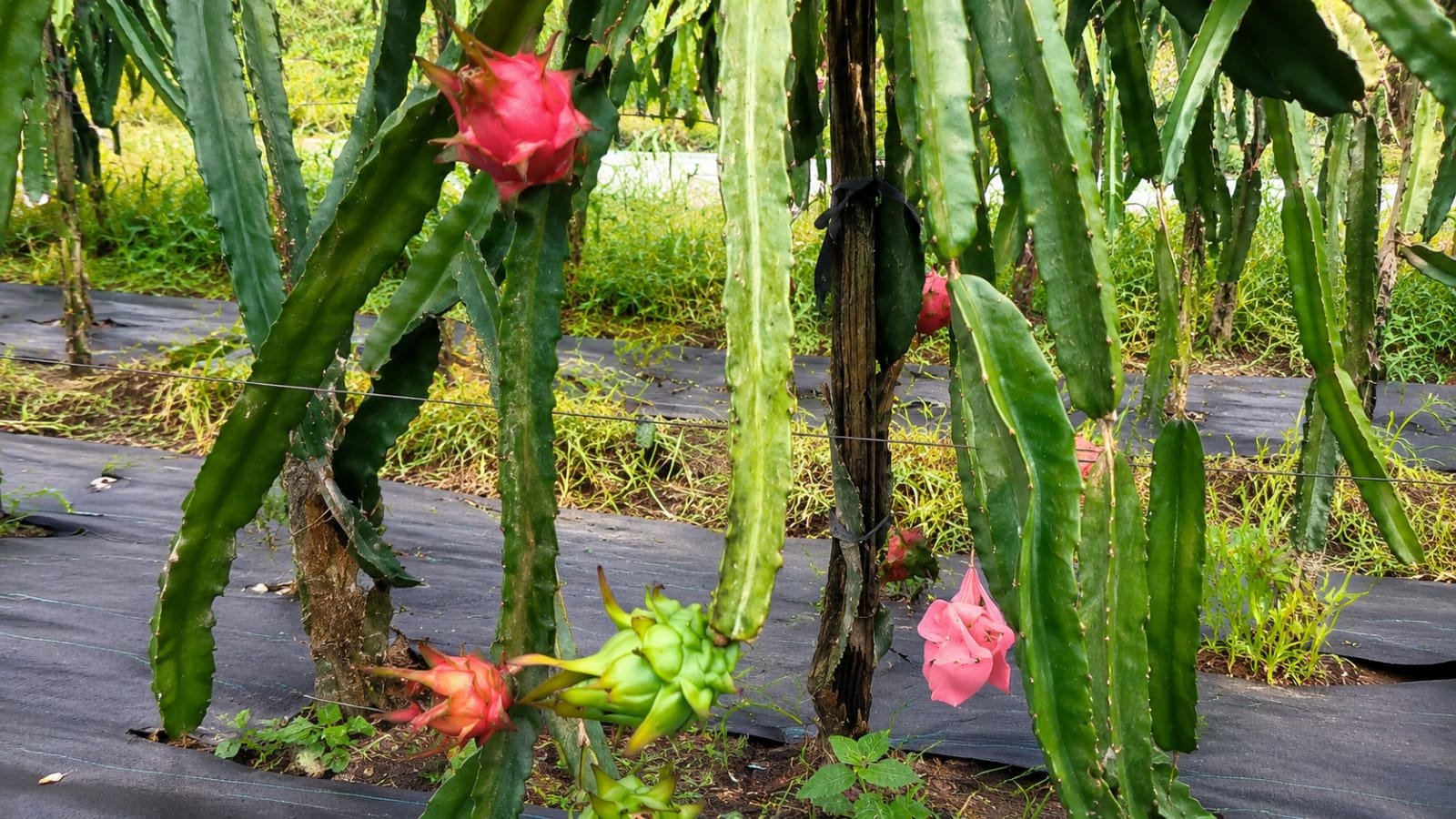
Dragon fruit production in the northern parts of India usually starts around the beginning of the monsoon season. In many areas, flowering starts when the first pre-monsoon rains begin around May and continues through the monsoon.
But every farm is different.
Some plants start flowering and fruiting properly, while others may still have very poor budding even in July. Therefore, we cannot follow the same treatment for every plant.
In this article, I am dividing the problem into two parts:
- What to do when your dragon fruit plants are already flowering and fruiting
- What to do when your plants still have poor budding even in July
This information is mainly based on the conditions of northern India, where dragon fruit plants have to face extreme heat in May and June before the monsoon arrives.
Part 1: What to Do When dragon fruit production Has Already Started
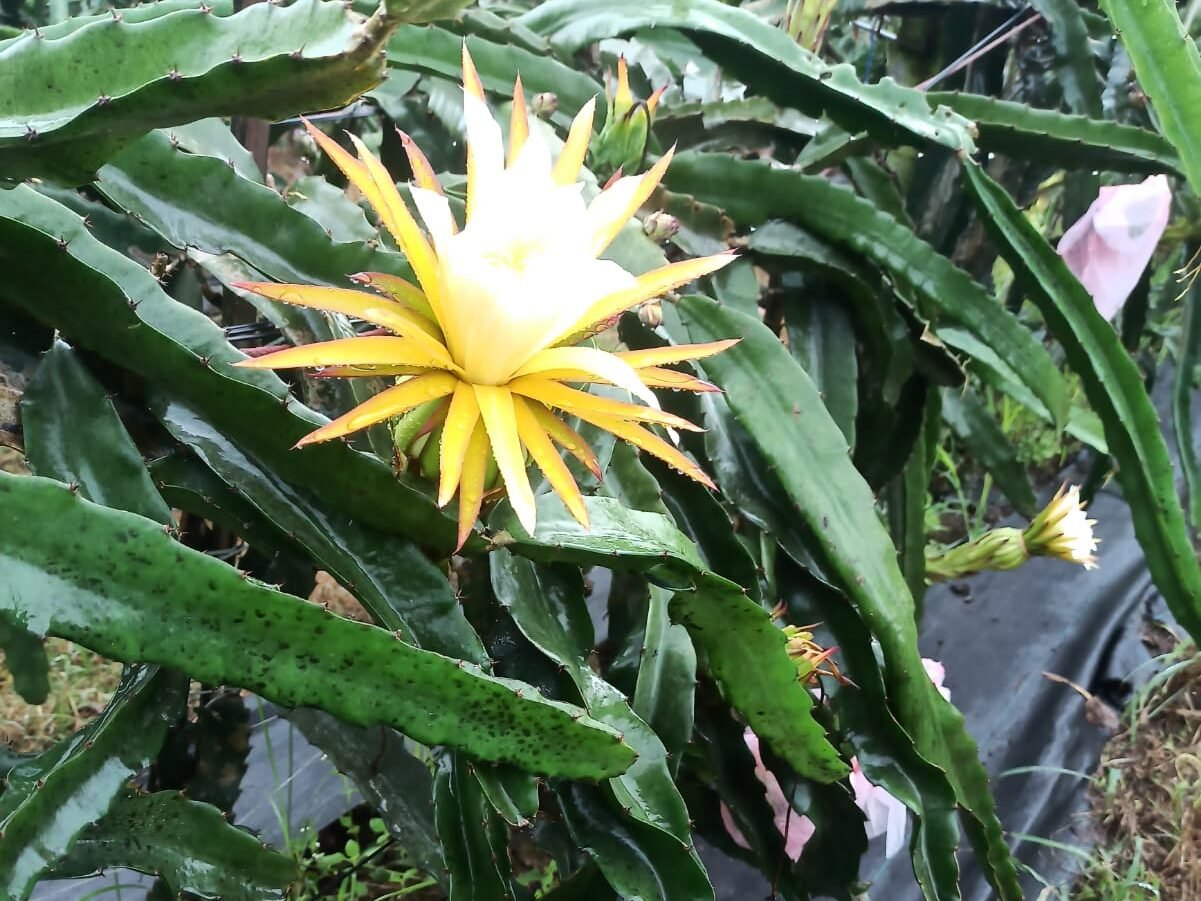
Start Preparing Your Plants Before the Monsoon
In northern India, dragon fruit production & flowering should ideally begin before the monsoon season.
We generally start preparing the plants in May by giving proper nutrition, controlling unnecessary vegetative growth, and using suitable plant tonics when required.
The aim is to prepare a healthy plant so that it can produce good flower buds when the weather becomes favourable.
Give Nutrition at the Right Time
The May fertilizer application is important because the plant needs proper nutrition before the main flowering period begins.
The exact fertilizer program can vary depending on:
- Plant age
- Plant health
- Canopy size
- Soil condition
- Existing nutrient levels
The goal should not be to simply apply more fertilizer. The plant needs the right nutrition at the right stage.
Control Excessive New Growth
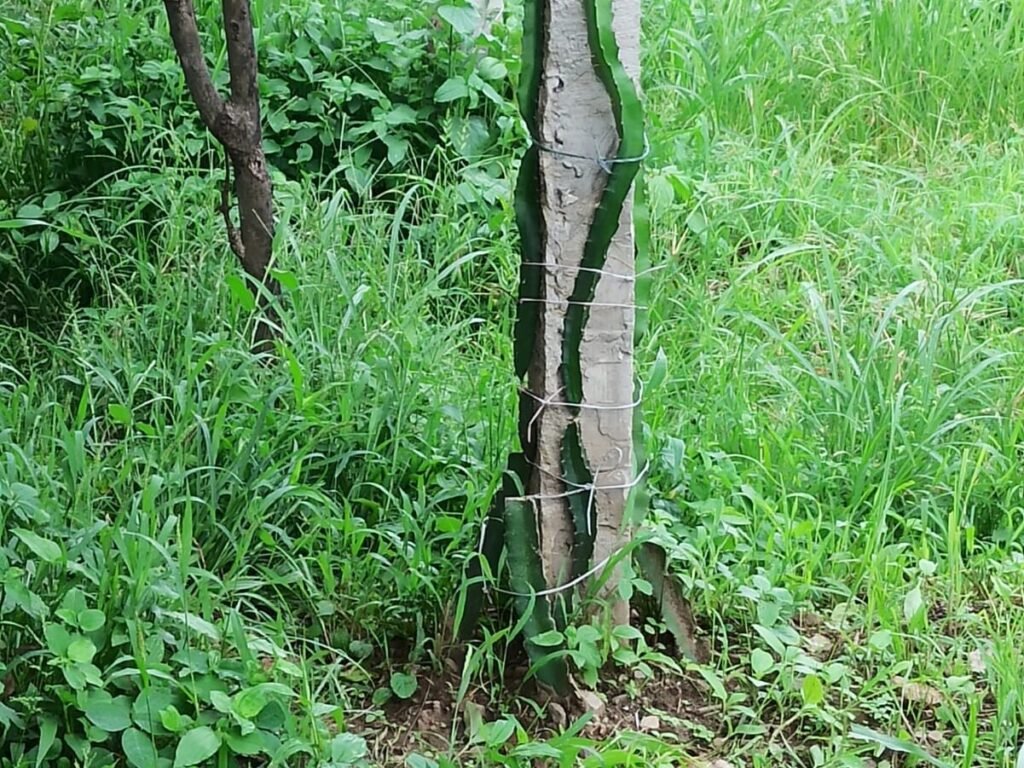
Before and during the fruiting season, excessive vegetative growth should be controlled.
If the plant keeps producing too much unnecessary new growth, it may not use its energy efficiently for flowering and fruit development.
This becomes even more important during the monsoon because excessive new growth and high humidity can increase the chances of fungal problems.
Use Plant Tonics When Required
Suitable plant tonics can also be used during the pre-monsoon period to support plant health.
The purpose should be to prepare the plant for flowering and fruiting, not to continuously force the plant to grow.
The most important thing is to follow a proper schedule and observe how the plants are responding.
Soil Nutrition for Better Flowering and Fruiting
Once the dragon fruit production season begins, we need to focus on the plant’s current nutritional requirements.
In my farming practice, I use a combination of organic matter and fertilizers according to the plant’s condition and size.
Apply Compost Around the Pole
For mature plants, around 15 kg of compost per pole can be used, depending on the size of the plants and their canopy.
Compost helps add organic matter to the soil and supports the overall soil environment.
Add Neem Cake
Neem cake can also be added to the soil.
It can be useful as part of an overall soil management program and may help with problems related to certain soil insects, nematodes, and ants.
However, neem cake should not be considered the only solution for pest problems. Regular monitoring of the farm is still important.
Add Phosphorus and Potassium
For phosphorus, farmers can use products such as rock phosphate or SSP, depending on the soil condition and the overall fertilizer program.
Potassium is also important during flowering and fruit development.
The quantity of fertilizer should be adjusted according to the age of the plants and the size of the canopy. A small plant and a large mature canopy should not receive exactly the same amount of fertilizer.
Foliar Nutrition for Flower Bud Development
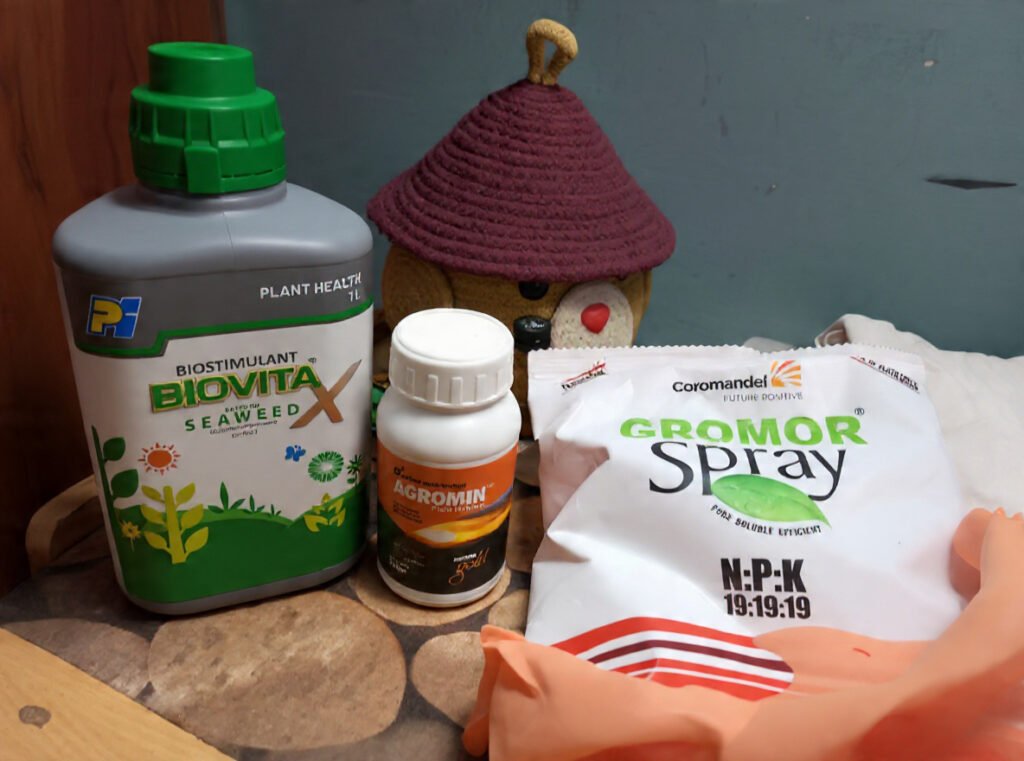
Along with soil nutrition, foliar sprays can also be used to support flower bud development.
During this stage, 12-61-00 can be used along with a suitable micronutrient mixture.
Choose the Right Micronutrient Mixture
When selecting a micronutrient product, always check its composition.
A good micronutrient mixture may contain:
- Calcium
- Magnesium
- Zinc
- Iron
- Manganese
- Cobalt
- Boron
- Molybdenum
If these nutrients are available in suitable chelated forms, such as EDTA forms where applicable, that can be beneficial for nutrient availability.
Always follow the product label and recommended dose.
Stop Unnecessary Sprays Once Buds Appear
Once the plants start producing flower buds properly, unnecessary foliar sprays should be stopped.
The goal is not to keep spraying the plant with different products continuously.
Once the plant has started giving the desired response, allow it to focus on flowering and fruit development.
Potassium Management During July and August
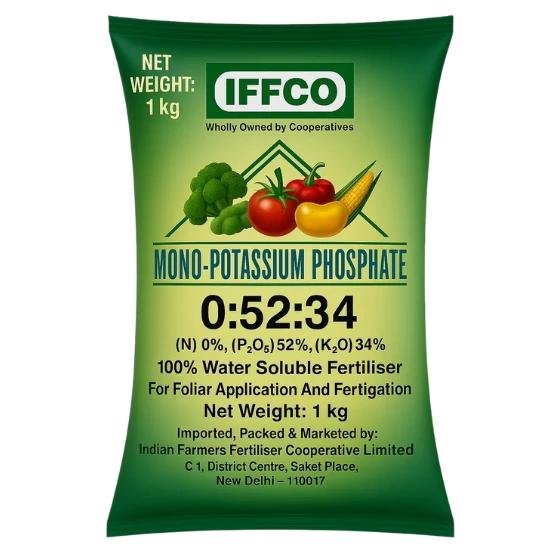
During July and August, potassium becomes very important for fruit development.
A fertilizer such as 00-52-34 can be used at suitable intervals, such as every 15 days, depending on the crop stage and the overall nutrition program.
This helps maintain potassium availability for:
- New flower buds
- Developing fruits
- Fruits that are already maturing
In this way, we can support the new fruiting cycles as well as the fruits already present on the plant.
How to Improve Fruit Size
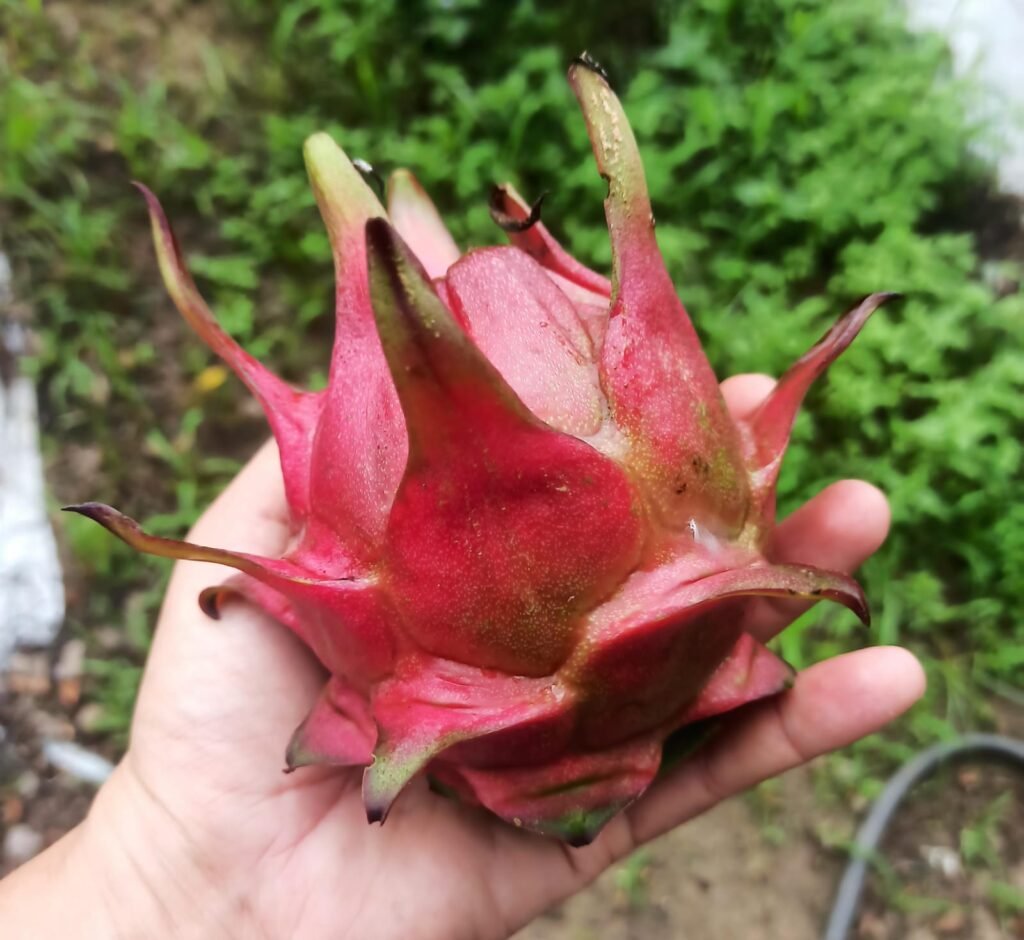
Potassium and amino acids can be used as part of a fruit development program.
However, fertilizer is not the only thing that decides fruit size.
Proper pollination is also very important.
If pollination has taken place properly and the plant is healthy, the fruit generally has a better chance of developing good size.
So, for good fruit size, we need to focus on:
- Proper pollination
- Adequate potassium
- Healthy plants
- Balanced nutrition
- Good pest and disease management
Avoid Excessive New Growth During the Rainy Season
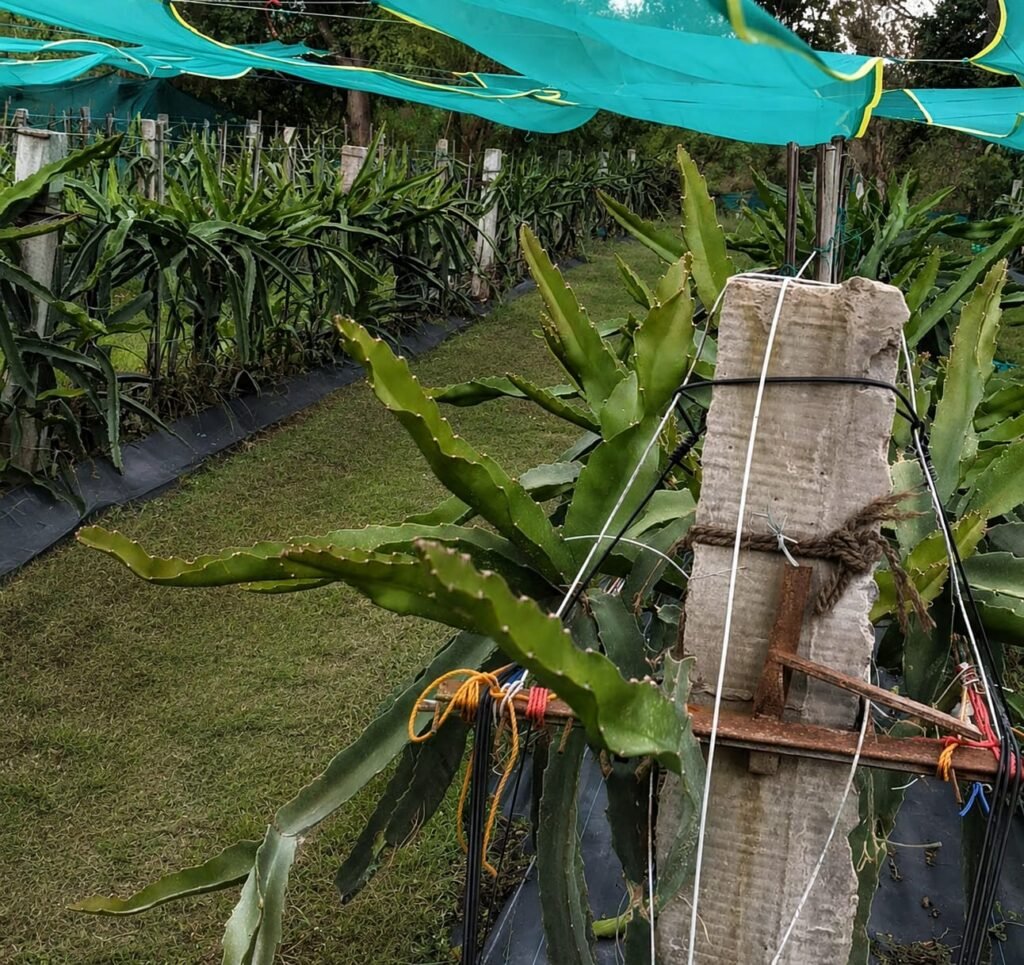
During the rainy season, we should avoid unnecessary new growth as much as possible.
New shoots can be more vulnerable to fungal problems, especially when there is:
- High humidity
- Continuous rainfall
- Poor airflow
- Moisture remaining on the plant
Therefore, our aim should be to maintain healthy and balanced growth instead of continuously pushing the plant to produce more shoots.
Protect Fruiting Plants from Insects
During the dragon fruit production in Indian season, regularly check the plants for insect problems.
Look for:
- Scale insects
- Mealybugs
- Ant activity
- Other sucking pests
Neem oil, biological insecticides, or other suitable pest management products can be used according to your farming practice and the pest problem.
The important thing is to identify the problem early before it creates unnecessary stress for the plant.
What to Do When Budding Is Still Poor in July
First Find Out Why the Plant Is Not Budding
If your dragon fruit plants have still not produced proper flower buds even in July, do not immediately start applying more fertilizer.
First, look carefully at your plants and try to understand the actual reason.
Check:
- Plant colour
- Overall plant health
- Signs of heat stress
- Dry or damaged branches
- Canopy development
- Soil moisture
- Nutritional condition
- Pest and disease problems
You need to check your own farm and your own plants.
Every plant does not need the same treatment.
The treatment should depend on the actual condition of the plant.
Remember That Dragon Fruit Is a Tropical Cactus
Dragon fruit is a tropical cactus.
However, the climate in northern India is not completely ideal for the plant throughout the year.
In May and June, we can experience very high temperatures. This extreme heat can put the plants under a lot of stress.
And if the plant is already stressed, how can we expect it to produce good flowering?
So, before trying to increase flowering, first check whether the plant is healthy enough to flower.
Check for Heat Stress
First look at the plants carefully.
Have they started becoming yellow?
Do they look dry?
Do some parts look damaged or sunburned?
Are the plants looking weak?
These are signs that the plant may have gone through heat stress.
If the plant is already under stress, the first priority should be to help it recover.
A stressed plant needs to recover before we can expect it to produce good flowering.
Use Shading or Intercropping to Reduce Summer Stress
During the extreme summer heat, shading or suitable intercropping can be very helpful.
These methods can reduce the intensity of heat reaching the plants and help them handle the summer conditions better.
This is especially important in northern India, where the temperature can become extremely high during May and June.
If we can protect the plants from severe summer stress, they have a better chance of remaining healthy and producing flowering during the fruiting season.
Step 1: Correct Yellowing and Heat Stress with Magnesium Sulphate
If the plants have become yellow or are showing signs of heat stress, magnesium sulphate can be used as part of a recovery program.
It can be applied through:
- Foliar spray
- Drip irrigation
For foliar spray, around 5–6 grams per liter can be used according to the crop condition and product recommendation.
For drip application, around 1–2 kg for approximately 2,000 plants may be used depending on the condition of the plants and the overall fertilizer program.
Magnesium is important for chlorophyll formation and photosynthesis.
It can help reduce yellowing caused by magnesium deficiency and support the recovery of plants that have been affected by heat stress.
However, remember that every case of yellowing is not caused by magnesium deficiency. You should first try to understand the actual cause.
Step 2: Apply Amino Acid for Recovery
After applying magnesium sulphate, we can use an amino acid spray as part of the recovery program.
I prefer to maintain a gap of around 3–4 days between the magnesium sulphate and amino acid spray.
Amino acids can help support the plant during the recovery process after stress.
The sequence can be:
Magnesium sulphate → 3–4 days → Amino acid
First, we provide the required nutrient support, and then we support the plant’s recovery.
Step 3: Use Seaweed After Amino Acid
After the amino acid spray, a seaweed-based product can be used after another suitable gap.
Products such as seaweed extracts, including products like Bioveeta or Sagarika Seaweed, can be used as part of a plant recovery program.
The sequence can be:
- Magnesium sulphate
- After 3–4 days, amino acid
- After another 3–4 days, seaweed extract
When plants are suffering from heat stress, the first thing we need to do is help them recover.
After following this type of recovery sequence, we may start seeing improvement in the plant’s colour and overall condition within some time.
Once the Plant Is Healthy, Focus on Flowering Nutrition
Once the plant has recovered from heat stress, we can start focusing on its current nutritional requirements.
This is an important point.
A stressed plant should not be treated in exactly the same way as a healthy plant.
First, improve the health of the plant. After that, provide the nutrition required for flowering and fruiting.
Improve Soil Nutrition for Better Flowering
Once the plant is healthy, we can focus on improving soil nutrition.
A soil nutrition program may include:
Compost
For mature plants, around 15 kg of compost per pole can be used, depending on the size and canopy of the plants.
Neem Cake
Neem cake can be added as part of the soil management program.
It can help support soil health and may help with certain soil-related pests, nematodes, and ants.
Phosphorus
Rock phosphate or SSP can be used as a phosphorus source according to the requirements of the farm.
Potassium
Potassium can also be added to support flowering and fruit development.
These materials can be combined into a suitable fertilizer mixture, with the quantity adjusted according to the plant age and canopy size.
Foliar Nutrition After Plant Recovery
Once the plant has recovered and the soil nutrition has been improved, foliar nutrition can be used to support flower bud development.
At this stage, 12-61-00 can be used along with a suitable complete micronutrient mixture.
The micronutrient mixture should ideally contain nutrients such as:
- Calcium
- Magnesium
- Zinc
- Iron
- Manganese
- Cobalt
- Boron
- Molybdenum
Chelated forms of micronutrients can be preferred where suitable.
The important thing is to check the product composition and use it according to the recommended dose.
What to Do Once Flower Buds Appear
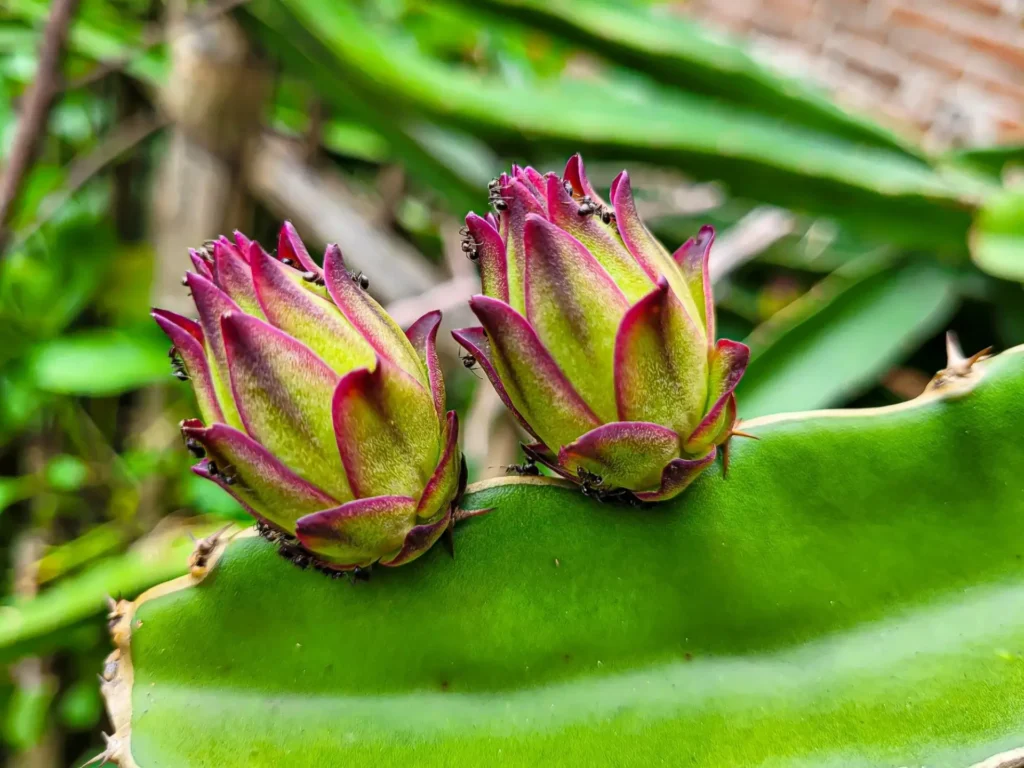
Once the plants finally start producing flower buds, unnecessary foliar sprays should be stopped.
At this point, the plant has started giving the response we were waiting for.
Now the focus should be on:
- Protecting the flower buds
- Supporting flowering
- Ensuring proper pollination
- Managing insects
- Preventing fungal problems
- Supporting fruit development
More spraying does not always mean more flowering. we can use 005234 & 12-61-00 for better results which lead to increase in dragon fruit production in 1 acre.
Potassium After Flower Bud Formation
Once the buds have appeared, potassium becomes important for fruit development.
During July and August, 00-52-34 can be used at suitable intervals, such as every 15 days, depending on the crop stage and overall fertilizer program.
This helps maintain potassium availability for:
- New flower buds
- Developing fruits
- Fruits that are already maturing
The nutrition program should always be adjusted according to the condition of the plants and the fruit load.
How to Improve Fruit Size
After proper pollination, potassium and amino acids can be used as part of the fruit development program.
But again, pollination is extremely important.
Even if the plant receives good nutrition, poor pollination can affect fruit development and size.
For good fruit size, we need:
- Healthy plants
- Proper pollination
- Adequate potassium
- Balanced nutrition
- Good pest management
Avoid Excessive New Growth During the Rainy Season
During the rainy season, try to avoid unnecessary new vegetative growth.
New shoots can be more vulnerable to fungal problems, especially when the weather remains humid and wet.
High humidity, continuous rain, and poor airflow can create favourable conditions for fungal infections.
Therefore, the aim should be to maintain healthy and balanced growth instead of continuously forcing the plant to produce new shoots.
Protect Plants from Insects and Additional Stress
Plants that have already suffered from heat stress should be monitored carefully.
Insects can create additional stress during the flowering and fruiting season.
Regularly check the plants and use suitable pest management methods when required.
Depending on your farming practice, you can use options such as:
- Neem oil
- Biological insecticides
- Other suitable insect control products
The goal is to prevent the plant from facing additional stress during the important fruiting period.
Final Monsoon Fruiting Strategy
If your dragon fruit plants are already fruiting:
- Maintain plant health
- Provide balanced nutrition
- Support fruit development
- Manage potassium
- Protect flowers and fruits
- Control insects and fungal problems
- Avoid unnecessary new growth
If your plants still have poor budding in July:
- First check the actual condition of the plants.
- Look for heat stress and yellowing.
- Help the plants recover.
- Use magnesium sulphate where required.
- Apply amino acids after a suitable gap.
- Follow with a seaweed-based product.
- Improve soil nutrition after plant health improves.
- Support flower bud development with suitable nutrition.
- Stop unnecessary foliar sprays once buds appear.
- Focus on potassium and fruit development after flowering begins.
The most important thing is to understand the condition of your plant before deciding what to apply.
A stressed dragon fruit plant cannot be expected to produce good flowering simply because we apply more fertilizer. First help the plant recover. Once the plant becomes healthy, provide the nutrition it needs for flowering and fruit development. with right nutrition we can expect good profit via dragon fruit production in 1 acre.
(FAQs)
Q1- Why is dragon fruit costly in India?
Yes. dragon fruit production is more expensive than many other fruits because it requires a high initial investment, proper trellis systems, skilled labor, and careful farm management. In many regions, demand is higher than local supply, which also keeps prices relatively high.
Q2- Can I eat one dragon fruit daily?
Yes. Eating one dragon fruit daily is safe for most healthy people. It is rich in fiber, vitamin C, antioxidants, and water, making it a nutritious addition to a balanced diet. However, people with specific medical conditions should follow their doctor’s advice.
Q3- What is the profit per acre of dragon fruit farming in India?
Yes. A well-managed dragon fruit farm can generate an attractive profit after the plants reach full production, usually from the third year onward. Profit depends on yield, fruit quality, market prices, and production costs. Good farm management plays the biggest role in maximizing returns.
Q4- Which Indian fruit is better than dragon fruit?
Yes. There is no single fruit that is “better” than dragon fruit because every fruit offers different nutritional benefits. Fruits like mango, guava, pomegranate, and amla are also highly nutritious. The best choice depends on your dietary needs and personal preference.
Q5- What is the No. 1 most expensive fruit?
Yes. Globally, Japanese premium fruits such as Yubari King Melons are among the most expensive. In India, imported premium fruits and high-quality seasonal varieties can also command very high prices in luxury markets.
Q6- How many dragon fruit plants are grown in 1 acre?
Yes. The number of plants depends on the planting system and spacing. Most commercial farms accommodate around 1,000 to 1,200 plants per acre, although the exact number varies according to the support structure and field layout.
Q7- What is the annual yield of 2 acres of red dragon fruit?
Yes. A well-maintained 2-acre red dragon fruit farm can produce several tonnes of fruit annually once the plantation reaches maturity. Actual production depends on plant age, variety, climate, irrigation, nutrition, and overall crop management.
Q8- How much does it cost to grow dragon fruit per acre?
Yes. Dragon fruit production in 1 acre – The first-year investment is relatively high because of the cost of concrete poles, planting material, drip irrigation, and labor. After establishment, annual maintenance costs are much lower, making the crop more economical in the long term.
Q9- How much dragon fruit does one plant produce?
Yes. A healthy mature dragon fruit plant can produce multiple harvests in a season. Yield per plant varies with variety, plant age, weather conditions, and farming practices, but regular pruning and balanced nutrition can significantly improve production.
Q10- Is dragon fruit farming profitable?
Yes. Dragon fruit farming is considered one of the profitable horticultural businesses in India when managed properly. Strong market demand, multiple harvests each year, and increasing consumer awareness make it an attractive crop for commercial growers.
Q11- How much profit can I earn from 1 acre?
Yes. The profit from one acre depends on production costs, fruit quality, yield, and market prices. Farmers who follow good agricultural practices and sell premium-quality fruits generally achieve better returns than those relying only on local wholesale markets.
Q12- What is the price of 1 kg of dragon fruit in India?
Yes. The price varies by season, variety, and location. Fresh dragon fruit generally sells at a higher price during periods of limited supply, while prices may decline during peak harvesting months when market arrivals increase.
Q13- Does India produce dragon fruit?
Yes. Dragon fruit cultivation is expanding rapidly across India. States such as Gujarat, Maharashtra, Karnataka, Andhra Pradesh, Telangana, Tamil Nadu, West Bengal, and Himachal Pradesh are increasingly adopting commercial dragon fruit farming.
Q14- Which country has the cheapest dragon fruit?
Yes. Countries with large-scale commercial production, such as Vietnam, often have lower domestic dragon fruit prices because of higher production volumes and efficient supply chains. Export prices may differ depending on demand and transportation costs.
Q15- Why is dragon fruit so costly in India?
Yes. Dragon fruit remains costly because commercial cultivation is still developing in many parts of India. High setup costs, labor requirements, post-harvest handling, and transportation expenses all contribute to its market price.
Q16- Is dragon fruit expensive in India?
Yes. Compared to common fruits like bananas and papayas, dragon fruit is generally more expensive. However, increasing cultivation and improved supply are gradually making it more affordable in many Indian markets.
Q17- Which fruit is very costly in India?
Yes. Several fruits are considered expensive in India, including imported cherries, blueberries, avocados, premium grapes, and dragon fruit it increases the dragon fruit production in 1 acre & Prices depend on availability, season, quality, and whether the fruit is locally grown or imported.