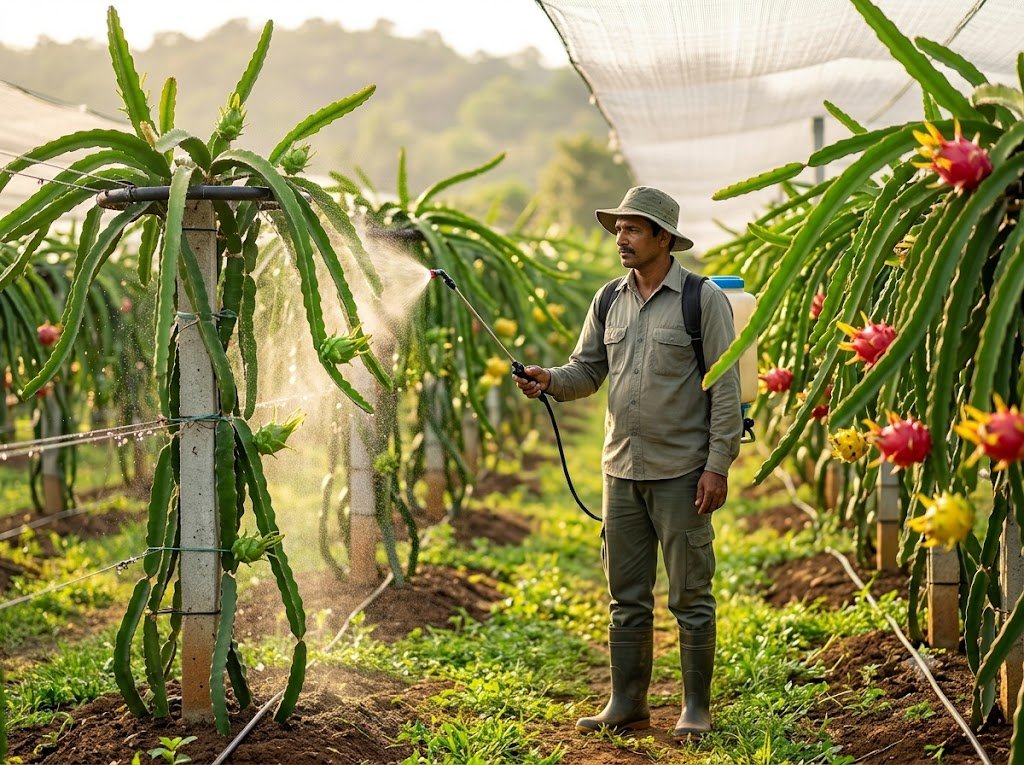
Cultivating exotic, high-value crops like the vibrant red and the highly sought-after Israeli yellow varieties is an incredibly rewarding venture. Whether you are managing a small boutique farm for direct-to-consumer home deliveries or operating a large-scale commercial plantation, the fundamental secret to massive yields lies entirely in plant nutrition. Many new farmers mistakenly believe that these resilient cacti can thrive on neglect. However, achieving commercial success and sweet, large fruits requires absolute precision. Establishing a highly structured dragon fruit fertilizer schedule is the foundational pillar of any successful agricultural enterprise. Without it, you simply cannot maintain healthy dragon fruit plants capable of supporting heavy harvests year after year.
In this comprehensive, step-by-step guide, we will explore every single aspect of crop nutrition. From the moment you prepare the soil to the critical post-harvest recovery period, we will break down the science of feeding your vines. By understanding exactly when and how to apply vital nutrients, you can eliminate common issues like premature flower drop, yellowing branches, and stunted growth.
1. The Crucial Role of Farm Infrastructure Before we dive into the specific chemicals and organic inputs, it is vital to understand that your farm’s physical setup directly dictates how well your plants absorb food. You cannot optimize nutrition if the physical environment is causing severe stress.
First, consider your support structures. These vines grow exceptionally heavy, especially when loaded with moisture and maturing fruits. Using durable, permanent concrete trellis posts ensures that the massive canopy has a stable framework. When vines climb concrete posts and spread evenly over a top support ring, they create a wide canopy that maximizes sunlight exposure. This optimal exposure is what allows the plant to process the nutrients you provide efficiently.
Second, consider the microclimate. While these exotic cacti love warmth, intense, scorching summer heat can halt photosynthesis entirely. Installing premium white shade nets across the plantation diffuses harsh sunlight, cooling the environment and preventing severe sunburn. When vines are relaxed under white shade nets, their stomata remain open longer. This makes the application of a dragon fruit foliar spray significantly more effective, as the liquid is absorbed quickly rather than evaporating instantly in the blazing sun.
2. Soil Preparation and Deep Root Stimulation The journey to a massive, profitable harvest begins deep underground. These specific plants possess a shallow, fibrous root system. They do not send deep taproots down into the earth; instead, they spread out widely just below the topsoil to capture surface moisture and decaying organic matter. Therefore, your soil preparation must be flawless.
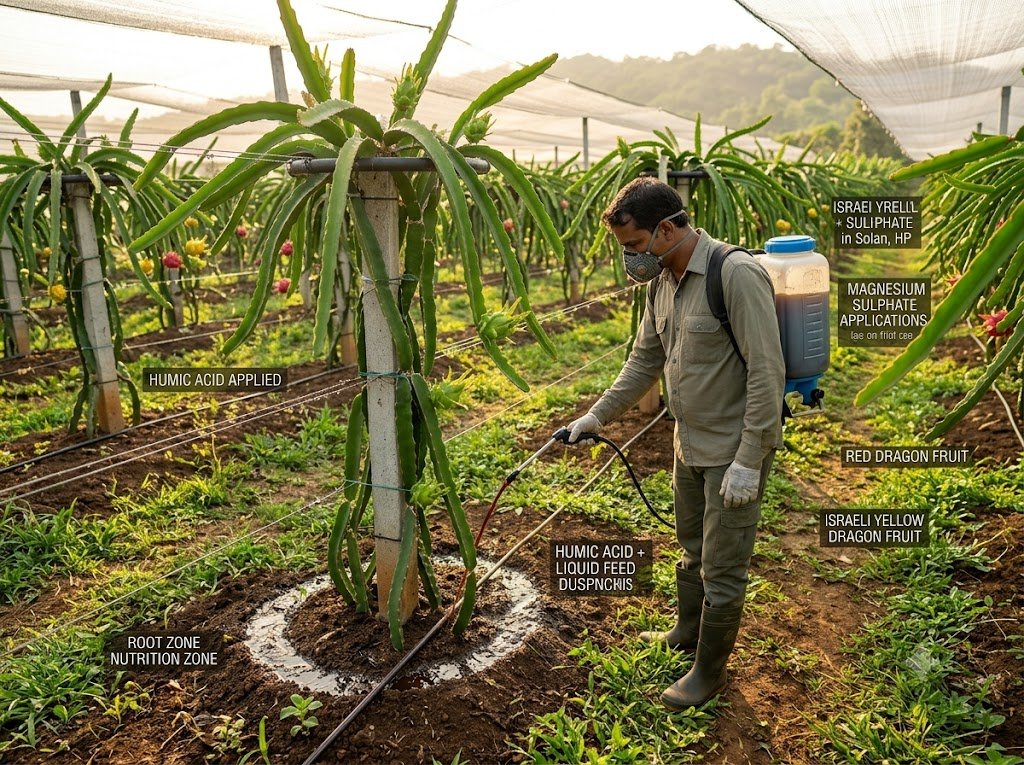
The very first phase of your annual dragon fruit fertilizer schedule must focus heavily on root health. Applying high-quality Humic Acid directly to the root zone at the base of the stems works absolute wonders for the soil structure. Humic acid increases the soil’s cation exchange capacity, meaning it helps the earth hold onto essential minerals and slowly release them to the roots over time.
It is crucial to remember that strong, well-developed roots are necessary to support the heavy, sprawling vines above. However, never pile fresh manure or raw chemical fertilizers directly against the main stem, as this quickly leads to fatal stem rot. Always apply your soil amendments in a wide circular ring around the base. This careful technique ensures you are cultivating vigorously healthy dragon fruit plants right from the ground up.
Dragon fruit fertilizer schedule
3. Accelerating Vegetative Growth Once the initial cuttings have successfully rooted and begun their upward climb up the concrete structures, the plant officially enters the vegetative growth stage. The primary goal during this months-long period is to produce extremely thick, robust, and dark green branches. Thin, spindly, or pale vines simply do not possess the internal carbohydrate reserves or the structural integrity required to bear large fruits later in the season.
During this aggressive growth phase, utilizing a highly targeted dragon fruit foliar spray becomes your most powerful agricultural tool. The vines need specific, fast-acting nutrients that are sometimes too slow to travel all the way from the shallow roots to the very top of the canopy.
Integrating Magnesium Sulphate into your liquid feeding routine is highly recommended. Magnesium is the central atom in the chlorophyll molecule. By spraying it directly onto the vines, you rapidly accelerate chlorophyll production, turning pale stems into a deep, rich green. Additionally, adding high-quality amino acids to this mix acts as an instant energy boost. Amino acids are the building blocks of proteins, helping the plant recover quickly from necessary pruning and unexpected environmental stress. Adhering to a strict dragon fruit fertilizer schedule during the vegetative stage guarantees that your canopy develops perfectly.
4. Navigating the Transition to Flowering As the seasons change, the weather warms, and the days grow longer, your mature vines will naturally begin to initiate delicate flower buds. Transitioning from vegetative leafy growth to the critical flowering stage requires a major, strategic adjustment in your feeding routine.
You must slightly reduce nitrogen applications, as excessive nitrogen will encourage the plant to keep growing new branches instead of producing flowers. At the same time, phosphorus and potassium levels must be drastically increased. Applying a specialized, water-soluble 0:52:34 nutrient mix provides the exact elemental spike required to support massive, healthy bud development. This transition is often where novice growers fail, but adjusting your dragon fruit fertilizer schedule precisely at this moment is what separates an average farm from a highly lucrative one.
5. Preventing Flower Drop and Securing the Fruit Set One of the most frustrating, heartbreaking challenges any farmer can face is sudden flower drop. You spend an entire year nurturing healthy dragon fruit plants, the massive flower buds finally appear, and then, inexplicably, they turn pale yellow and drop to the ground before ever opening. This single issue can decimate your potential harvest and ruin your financial projections.
Flower drop is typically caused by extreme temperature fluctuations, sudden changes in watering, or specific micro-nutrient deficiencies. To actively combat this, farmers must utilize advanced techniques. Applying a specialized dragon fruit foliar spray that carefully incorporates a plant growth regulator, such as Planofix, can save your entire crop. When applied at the exact expert-recommended dosage (typically around 0.3 ml per liter of water) during early flowering, it helps the plant retain its delicate blooms and successfully set the fruit. Furthermore, ensuring your liquid feed contains adequate levels of Boron and Zinc will improve the ultimate size, weight, and sweetness of the resulting harvest.
6. Integrated Pest Management for Exotic Crops Optimal nutrition and pest control go hand in hand. A malnourished, stressed crop is naturally far more susceptible to invasive insect infestations and destructive fungal diseases. A farm bursting with sweet floral nectar and ripening red and yellow fruits is a massive magnet for opportunistic pests like ants, sap-sucking aphids, and mealybugs.
However, aggressively applying harsh chemical pesticides can severely damage the sensitive flowers, harm beneficial pollinating insects like bees, and leave unwanted, toxic residue on your premium fruits. To ensure your healthy dragon fruit plants remain entirely safe, you must integrate bio-insecticides into your routine. Products like Katyayani bio-insecticide are highly effective at neutralizing localized pest populations organically. You can seamlessly incorporate these safe, biological controls directly into your regular dragon fruit foliar spray, saving you immense amounts of time and manual labor while fiercely protecting the purity of your direct-to-consumer harvest.
7. Best Practices for Applying Nutrients Having the absolute best organic inputs and chemical boosters is only half the battle; knowing exactly how and when to apply them is what truly matters. Every single farming setup features unique microclimates and specific soil compositions, but adhering to a strict, non-negotiable dragon fruit fertilizer schedule guarantees a reliable baseline of consistency.
Timing is everything in agriculture. Always remember to apply your chosen dragon fruit foliar spray during the very early morning hours or late in the calm evening. Spraying during the intense heat of the midday sun is a massive mistake. The heat causes the plant’s stomata to close tightly, completely wasting your expensive liquid nutrients. Worse, the magnified sunlight hitting the wet stems can cause severe, permanent chemical burns. Careful, deliberate, and scientific timing directly results in consistently healthy dragon fruit plants that thrive in their environment.
8. The Importance of Post-Harvest Recovery The grueling work of a farmer absolutely does not stop once the final fruits are carefully packed and shipped out for delivery. After completing the exhausting, months-long harvest of your premium exotic fruits, your vines will be severely depleted. They have heroically transferred nearly all of their stored internal energy and carbohydrates into producing the crop you just sold.
Many amateur growers make the fatal mistake of completely abandoning their dragon fruit fertilizer schedule during the quiet off-season. This is a massive error. Immediately after the final harvest is complete, you must quickly hit the tired vines with a deeply nourishing, nitrogen-rich dragon fruit foliar spray and thoroughly replenish the depleted base soil with rich organic compost and humic acid.
This critical restorative phase allows the vines to heal from the trauma of harvesting, rebuild their internal carbohydrate stores, and comfortably survive the cold, dormant winter months. By prioritizing post-harvest care, you ensure that they will aggressively explode with vigorous new growth the following spring, maintaining highly productive, healthy dragon fruit plants for decades to come.
Frequently Asked Questions (FAQs)
Q1- What is the ideal NPK ratio for the flowering stage?
During the flowering and fruiting window, it is highly recommended to shift away from nitrogen and towards higher phosphorus and potassium formulations. Water-soluble blends like 0:52:34 are incredibly effective in promoting large, sweet fruits and actively minimizing premature bud drop.
Q2 – How can I effectively stop my flowers from turning yellow and falling off?
Flower drop is an incredibly common stress response. Utilizing a highly regulated plant hormone treatment like Planofix, applied at the exact correct dosage during the early budding stage, alongside adequate boron and zinc, usually resolves this stressful issue and secures the harvest.
Q3- Is it necessary to use concrete for the support structures?
Yes, without a doubt. Mature vines become incredibly heavy, especially after heavy rains and when fully loaded with a commercial crop. Wooden posts will inevitably rot over time, and metal can rust or heat up excessively, burning the stems. Concrete posts are a permanent, stable, and highly necessary investment for long-term farming success.
Q4- How do white shade nets improve overall farm yield?
While these exotic cacti absolutely love bright light, excessive UV radiation and extreme summer heat can cause severe sunburn, completely halting the vital process of photosynthesis. Premium white netting filters the harsh rays, diffusing the light evenly and keeping the internal plantation temperature significantly cooler, which encourages continuous, uninterrupted, and stress-free vegetative growth.