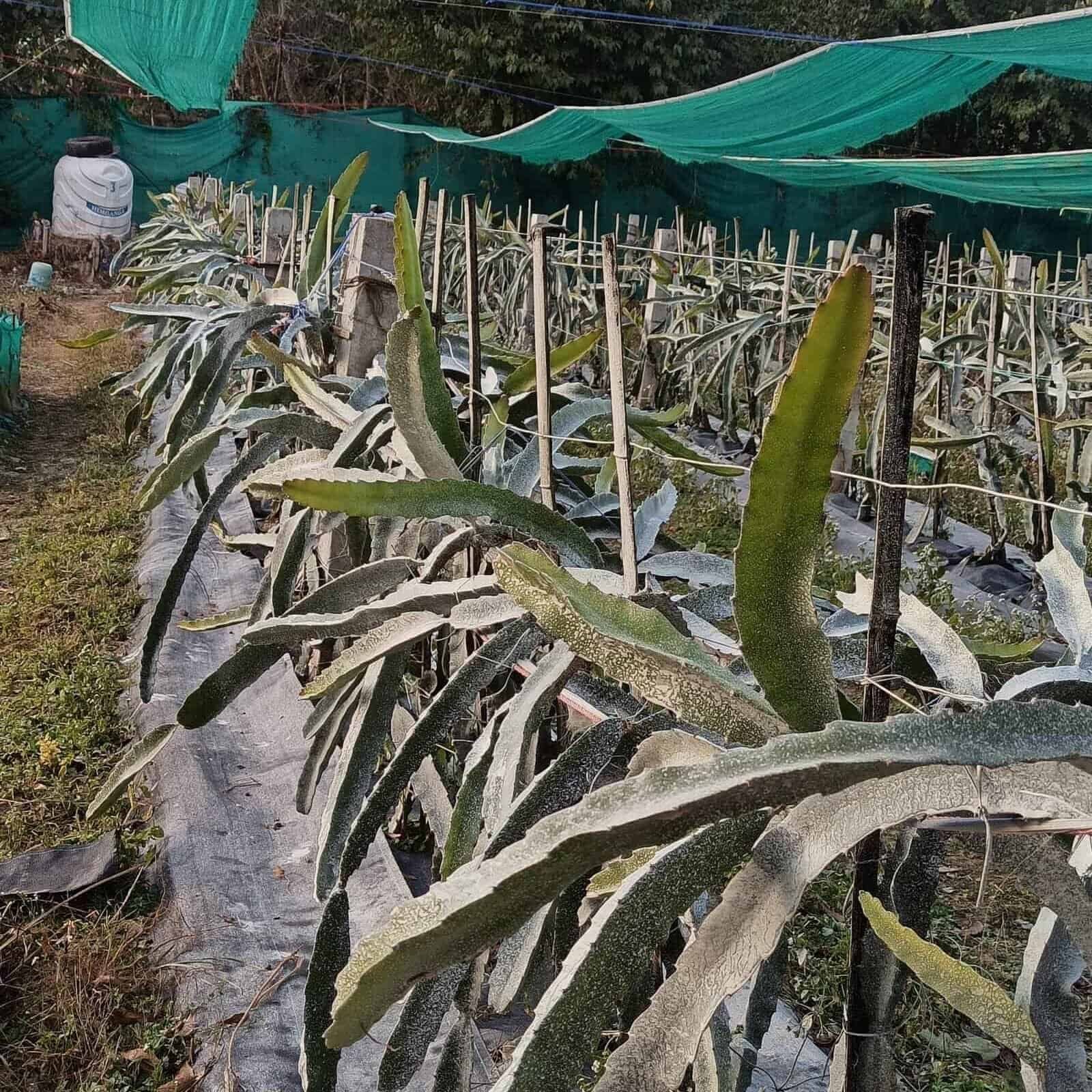
Dragon fruit has quickly gone from a rare, pricey supermarket item to a serious commercial crop for Indian farmers — grown everywhere from Gujarat’s plains to the hills of Himachal Pradesh. The question people keep asking is simple: Can dragon fruit really be grown in India?
Yes — in more places than you’d think.
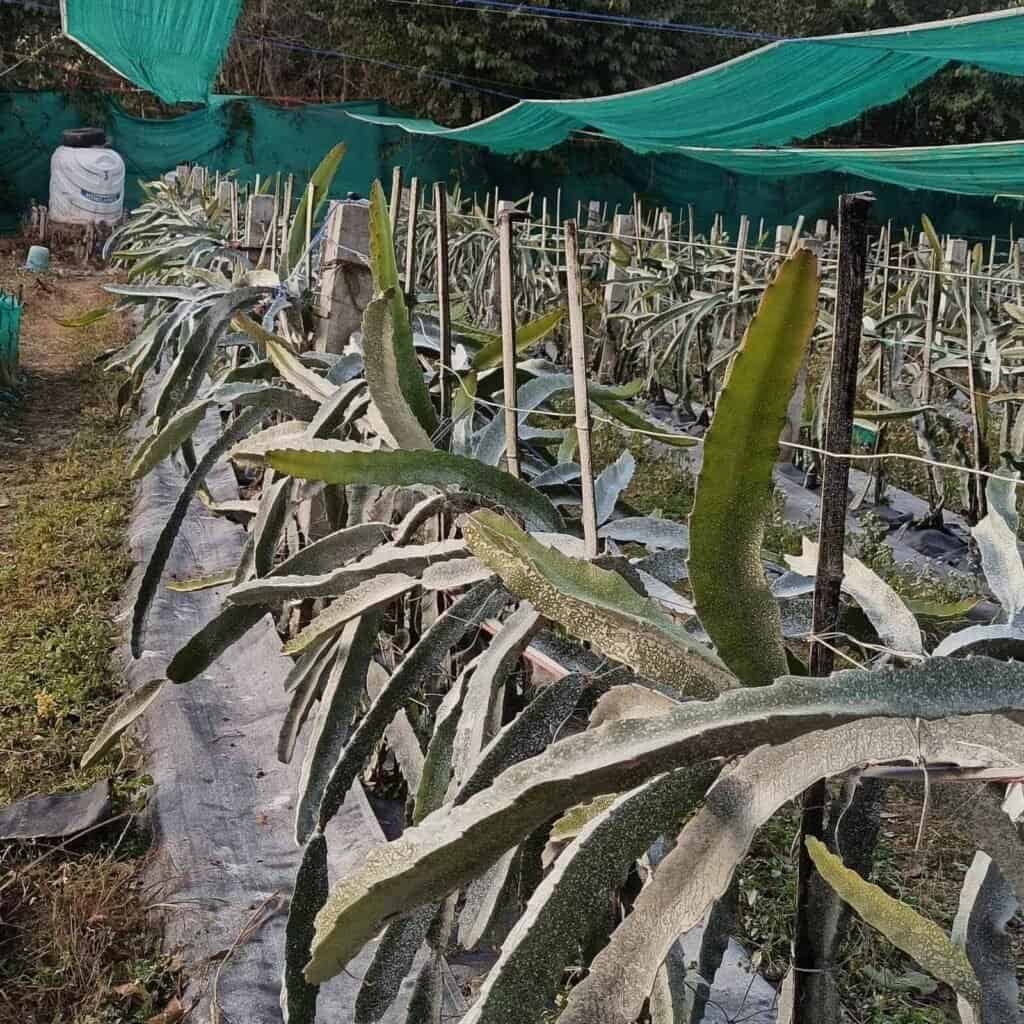
This tropical cactus doesn’t even have real leaves — just fleshy green stems that handle photosynthesis and eventually produce its striking flowers and fruit. Beyond the unusual looks, it’s the nutrition that’s driving demand: rich in fiber, antioxidants, vitamins, and minerals, exactly what health-conscious buyers are looking for.
But dragon fruit isn’t a plant-and-forget crop. It prefers warmth, yet success really comes down to how it’s grown, not just where. Climate for Dragon Fruit Farming in India – Temperature, soil, moisture, sunlight, and seasonal extremes all matter. Warmer states have it easier, but northern India brings a tougher challenge — scorching summers paired with cold, sometimes frosty winters.
This is why most growers use raised beds instead of open fields — it gives far more control over drainage, soil texture, and the root environment.
We’ve experienced this ourselves, growing dragon fruit in Himachal Pradesh, where intense summer heat meets frosty winters — hardly a tropical cactus’s natural comfort zone. Yet with proper bed prep, mulching, moisture management, shade in summer, winter protection, and good nutrition, the plants adapt surprisingly well.
So, the real question isn’t “Can dragon fruit grow here?” — it’s “Can I create the right conditions for it?”
This guide covers exactly that: climate needs, growing regions across India, the soil-climate connection, ideal planting seasons, common challenges, and practical fixes — drawn from both general knowledge and our own hands-on experience in northern India.
Let’s start with what matters most: climate.
So, let us first understand the most important factor that determines how successfully dragon fruit can grow: climate.
Ideal Climate Conditions for Dragon Fruit
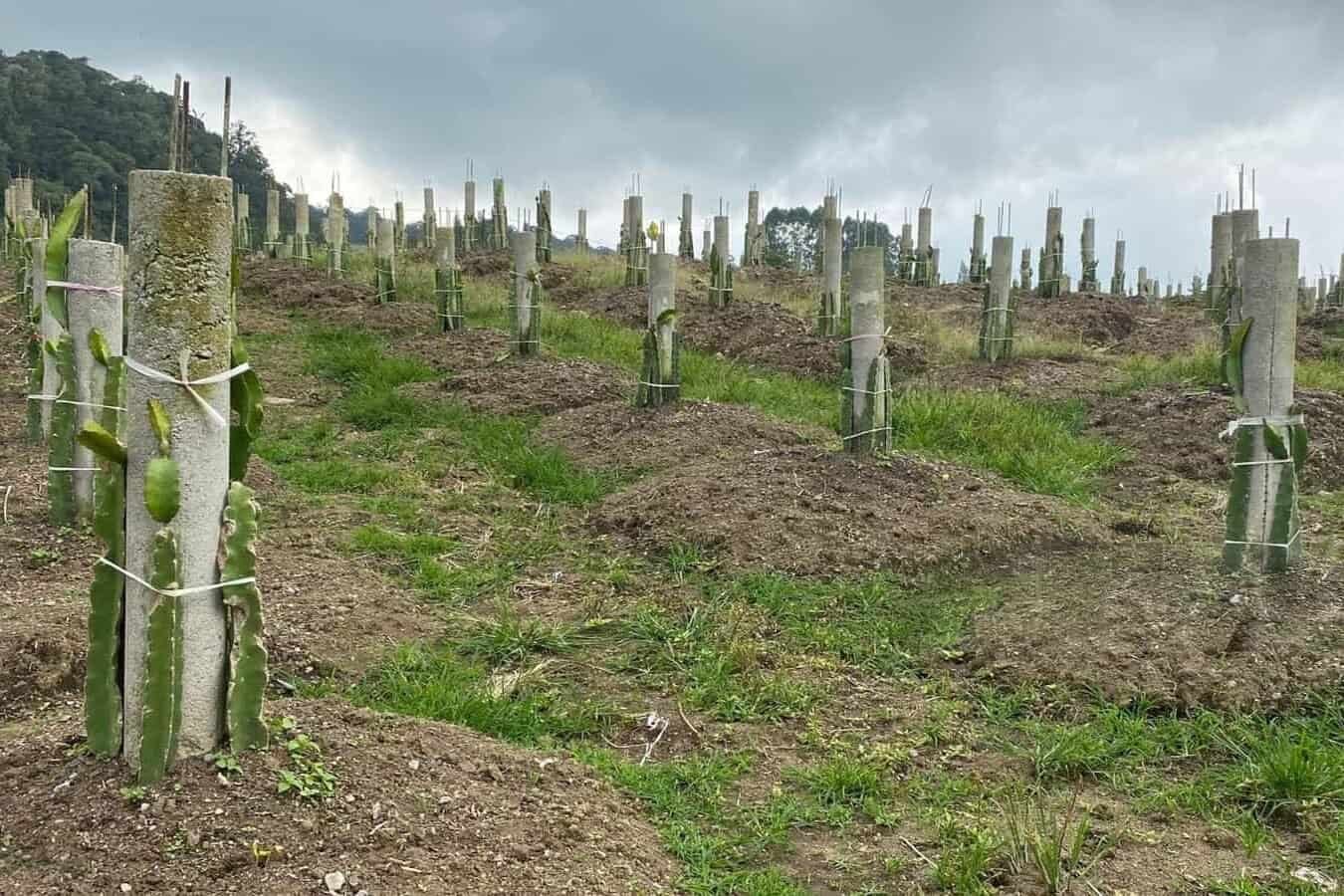
Before planting a commercial dragon fruit farm, understanding dragon fruit climate requirements. As a tropical cactus, it loves warmth and sunlight — but that doesn’t mean it wants heat all year round. Generally, temperatures between 10°C and 35°C work well, with the plant growing and fruiting most actively in moderate warm conditions.
Both extremes take a toll. Intense heat combined with strong sunlight can sunburn the stems and stress the plant, especially if the root zone dries out too. On the flip side, prolonged cold slows growth, frost damages tender tissue, and cold-wet combinations invite fungal problems — a real concern for northern Indian growers.
This is where managed cultivation beats leaving things to nature. Southern and western India often enjoy naturally favorable conditions for longer stretches, needing less intervention. But in regions with harsh summers or cold winters, farmers have to step in.
The good news? Dragon fruit is typically grown on raised beds, giving far more control over drainage, moisture, and root-zone health. Mulching helps retain moisture and keep soil temperatures in check during heat waves, while shade can ease stress during extreme conditions — though it should be used sparingly, since too much blocks the sunlight the plant genuinely needs.
Our experience with dragon fruit climate requirements in Himachal Pradesh makes this clear. Summers bring intense heat, while winter temperatures can drop close to 1°C — two very different challenges within the same year. It’s a reminder that management has to shift with the seasons, not stay fixed.
Common northern India challenges include summer heat, sunburn risk, winter cold, frost, wet-season disease pressure, and low winter sunlight. Yet commercial success remains achievable with the right farm design.
dragon fruit climate: dragon fruit doesn’t need a perfect climate — it needs well-managed conditions, tailored to the season and region.
The next important question is: if dragon fruit prefers warm conditions, which regions of India are naturally more suitable for its commercial cultivation, and why are farmers now growing it in areas with colder winters as well?
The next important question is: if dragon fruit prefers warm conditions, which regions of India are naturally more suitable for its commercial cultivation, and why are farmers now growing it in areas with colder winters as well?
Best Regions in India for Dragon Fruit Farming
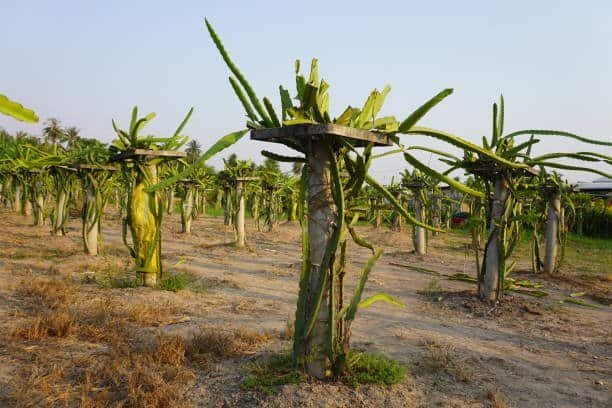
Dragon fruit farming in India first expanded in states — Gujarat, Maharashtra, Karnataka, Telangana, Andhra Pradesh, Tamil Nadu, and West Bengal — where climate for dragon fruit naturally suit this tropical crop.
Why Warm Regions Have an Advantage
Winter temperatures in these states rarely drop to the extreme lows seen in North India, letting plants stay active for longer.
A less severe winter means minimal dormancy, giving farmers a longer production window.
it lead to more flowering and better fruiting cycles across the year, depending on variety and management obviously.
Monsoon timing varies by region and directly affects soil moisture, humidity, and disease pressure.
Warmth alone isn’t enough — excessive rainfall, poor drainage, and prolonged wet conditions can still hurt yields even in “ideal” regions, so proper management remains essential.
Dragon fruit climate North India
States like Himachal Pradesh, Punjab, Haryana, Uttar Pradesh, Rajasthan, and Uttarakhand have started commercially growing dragon fruit in recent years.
The core challenge here is the wide temperature swing between seasons. Farmers may face multiple climate for dragon fruit challenges
Very high summer temperatures and intense sunlight
Heat stress on the plants
Cold winters, with frost in some areas
Fog and reduced sunlight during certain months
Winter rainfall in select regions
This makes active climate management more important than simply choosing a good variety.
Example: our own farm in Himachal Pradesh sees winter temperatures drop to around 1°C, while summers bring strong heat — requiring irrigation, nutrition, shade, and disease control to shift with the seasons rather than staying constant.
In colder regions, plant growth slows in winter, which affects the length and number of fruiting cycles compared to warmer states.
Coastal and Warmer Regions
Generally, offer moderate, favorable temperatures for dragon fruit.
But they come with their own risks: high humidity, heavy monsoon rainfall, waterlogging, and greater fungal disease pressure.
Good drainage becomes especially critical here.
Total dragon fruit climate requirements :
There’s no single “best” region where success is guaranteed automatically.
A warm-region farmer may enjoy a longer growing season, while a northern-region farmer may benefit from stronger seasonal sunlight and more controlled management practices.
Success depends on how well the crop is matched to local climate and how effectively challenges are managed.
Can Dragon Fruit Be Grown in any Regions?
Yes. Before investing in a commercial plantation outside the traditional belt, farmers should evaluate:
Minimum winter temperature and frost risk
Summer temperature and duration of extreme heat
Rainfall pattern
Sunlight availability
Soil drainage
Ability to manage the root-zone environment
A well-designed plantation — using raised beds, mulching, irrigation control, shade management, and proper nutrition — can offset many regional challenges. However, a system that works in Gujarat or Maharashtra may need real modification for Himachal Pradesh, Punjab, or Haryana. The smarter approach is understanding the crop’s basic needs first, then adapting to local conditions — starting with a small trial before scaling up to a full commercial plantation.
dragon fruit climate, however, doesn’t work in isolation — it’s closely tied to soil and the root-zone environment, which we’ll cover next.
Soil Requirements & Their Connection with Climate
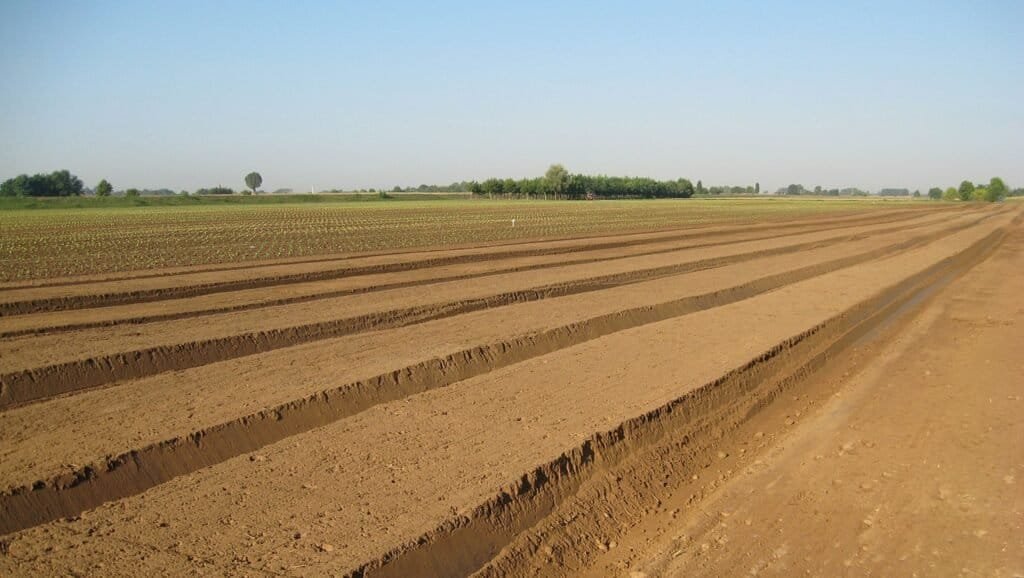
Soil is often underestimated in dragon fruit farming. Many assume that because it’s a cactus, it’ll grow in almost any soil — but poor drainage can cause real trouble, especially in high-rainfall or humid regions.
Ideal Soil Type
Loose, well-drained soil rich in organic matter works best.
Sandy loam is generally considered the top choice — it drains excess water while still holding enough moisture for healthy roots.
Ideal pH is around 6.5, though soil close to pH 7 also works fine if it’s healthy and nutrient-rich.
A slightly off pH isn’t a dealbreaker — the real question is whether the soil can be properly managed.
Why Drainage Matters So Much
Dragon fruit tolerates dry spells well, but roots suffer badly in waterlogged soil.
Prolonged excess water reduces oxygen in the soil, weakening roots and raising disease risk — a big concern during monsoon.
Avoid planting where water tends to accumulate.
If natural drainage is poor, raised beds help by offering:
Better drainage
Improved root-zone aeration
Easier moisture control
Lower waterlogging risk
Better control over soil composition
Organic Matter and Soil Health
Adequate organic matter improves soil structure and supports beneficial microbial activity.
Well-decomposed farmyard manure or compost works well — but manure must be fully decomposed first, since fresh manure can generate heat and damage roots.
Nutrient-rich soil isn’t enough on its own — physical structure matters too. Compacted, poorly drained soil can still produce weak plants even with good fertility.
How Soil and climate for Dragon fruit Work Together
Summer: Soil heats up and dries fast — mulching helps retain moisture and buffer temperature swings.
Monsoon: Excess moisture becomes the issue, especially in heavy soils — raised beds and drainage channels help manage this.
Winter: A healthy layer of organic matter and mulch helps stabilize root-zone temperature against sudden drops.
Soil management isn’t a one-time task before planting — it needs continuous adjustment through the year, especially in northern India where summer heat and winter cold are both extreme.
In our own experience, consistent use of organic matter, mulching, and moisture control creates a more stable root environment — the goal isn’t to change the outside climate, but to reduce stress on the plant.
Soil Preparation Before Planting
Before starting a commercial plantation, it’s worth testing soil for:
pH
Electrical conductivity
Organic matter content
Major nutrients
Micronutrients
This helps catch problems early. Poor drainage can be corrected, low organic matter can be supplemented, and pH issues can be addressed based on test results — all far easier to fix before planting than after.
A well-prepared root zone sets a stronger foundation, making irrigation and nutrient management much easier down the line.
Seasonal Considerations & the Best Time for Planting Dragon Fruit
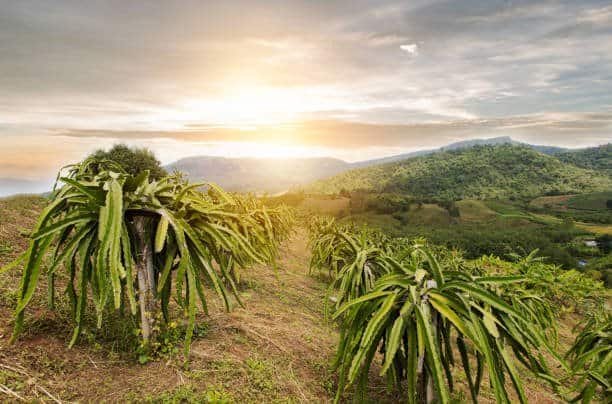
The right planting time depends on local climate, temperature, rainfall, and irrigation availability — what works in Gujarat won’t necessarily work in Himachal Pradesh. The general rule: plant when it’s warm enough for active root growth but not so extreme that young cuttings face severe heat or cold stress. In most of India, this means spring or monsoon season, adjusted to local conditions.
February to April: The Main Growth Window
- As winter fades and temperatures rise, plants become more active, and new roots/shoots develop well in warm, moist soil.
- This gives new plantations time to establish before peak summer hits.
- Requires careful irrigation, since young cuttings without a strong root system can lose moisture fast as temperatures climb.
- Mulching helps conserve moisture and buffer temperature swings.
- Key focus areas: controlled irrigation, heat protection, weed management, proper support for young plants, and watching for early stress signs.
Monsoon Planting
- Natural rainfall boosts soil moisture and cuts down irrigation needs — a plus in many regions.
- But it’s not risk-free — the main danger is excess moisture leading to waterlogging and root/stem problems.
- Proper drainage is essential; raised beds are especially useful in heavy-rainfall areas.
- Avoid planting right before extremely heavy rainfall if the field isn’t drainage-ready.
Why Extreme Seasons Should Be Avoided
- Young cuttings are far more sensitive than mature plants.
- plantation in hot days causes excess moisture loss and stress.
- Planting right before harsh winter slows root development and raises damage risk.
- The planting window should follow local weather patterns, not a fixed calendar — timing in a warm state will differ from timing in Himachal Pradesh or another northern region.
Seasonal Management of an Established Plantation
Spring
- Renewed vegetative growth as plants shake off winter dormancy.
- Focus: pruning, maintaining soil moisture, applying nutrients, checking support structures.
Summer
- Heat and intense sunlight can stress plants, especially in hot regions.
- Maintain soil moisture and use mulching to stabilize the root zone.
- Shade protection may help younger plants, but should be limited — dragon fruit still needs strong sunlight for healthy photosynthesis.
Monsoon
- Drainage and disease prevention take priority.
- Regularly check for water accumulation, stem health, fungal infection, excess humidity, and weeds.
- Reduce or stop irrigation when rainfall is sufficient.
Winter
- Especially critical in northern India — growth slows as temperatures drop, and frost/cold stress becomes a real risk.
- Mulching and organic matter help insulate the root zone from sudden temperature swings.
- Winter severity varies widely by region, so management needs differ between, say, a warm coastal farm and one in Himachal Pradesh.
Practical Notes for Himachal Pradesh and Northern Regions
- Planting timing needs extra care due to a shorter effective growing season.
- Goal: give young plants enough time to establish before extreme cold sets in, while also preparing for intense summer heat later.
- Success in these regions means planning management across the entire year, not just picking the right planting date.
The Ideal Planting Window Checklist
- Soil temperature suitable for root growth
- Extreme heat not yet arrived
- Severe winter still a safe distance away
- Irrigation manageable
- Drainage conditions favorable
Once planting timing is right, the next challenge becomes protecting the plants from extreme weather throughout the year.
Tips to Optimize Climate Conditions for Dragon Fruit Farming
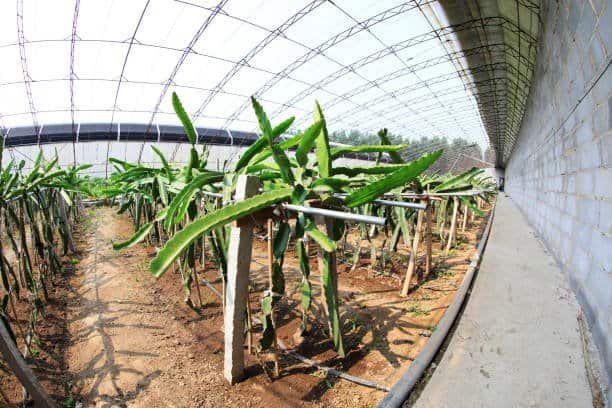
Climate for Dragon Fruit Farming in India
Farmers can’t control the weather, but they can control how much it affects their plants. In India, where the same crop might face scorching summers, heavy monsoons, cold winters, or dense fog depending on the region, smart environmental management makes all the difference. The goal isn’t to fight nature — it’s to reduce unnecessary stress and keep conditions around the roots and stems as stable as possible.
- Use Mulching During Hot Weather
Mulch reduces evaporation and keeps soil moisture more stable during intense summer heat.
Organic materials like grass or black plastic mulch both work, depending on the situation — plastic helps conserve moisture and suppress weeds especially well.
Keep some space between the mulch and the main stem to avoid a damp environment that invites rot.
Benefits: reduced moisture loss, moderated soil temperature, weed suppression, and protection from temperature swings.
If using plastic mulch, ensure proper drainage during monsoon season.
- Use Shade Carefully During Extreme Heat
Temporary shade can protect young plants or reduce sunburn risk during severe heat waves.
On our farm, roughly 50% green shade net works well when conditions get particularly harsh.
Avoid permanent or excessive shading — dragon fruit still needs strong sunlight for healthy photosynthesis and flowering.
The goal is protection from extremes, not blocking sunlight altogether.
- Maintain Soil Moisture During Summer
Check soil moisture regularly rather than sticking to a fixed irrigation schedule.
Avoid both prolonged dryness and overwatering — aim for stable, moderate moisture.
A combination of drip irrigation, mulching, good soil structure, and organic matter works best here.
- Protect the Root Zone During Winter
Especially important in northern India, where winter management can make or break the season.
Mulching reduces sudden temperature swings; organic matter improves overall soil health.
Well-decomposed poultry, cow, or goat manure can support soil and nutrition — but must be fully decomposed and never placed directly against the stem.
The goal is healthier soil, not artificial heat generation.
- Manage Winter Moisture Carefully
Cold combined with excess moisture is a tough combination for dragon fruit.
Soil should never stay continuously wet during winter rain — good drainage is essential.
Inspect the plantation after rainfall for water accumulation, and remove any diseased plant material promptly with proper diagnosis-based treatment.
- Support Plant Health During Low-Sunlight Conditions
Winter fog can reduce sunlight for extended periods, slowing photosynthesis and growth.
First, rule out other stress factors like waterlogging, nutrient deficiency, or disease.
If a genuine deficiency exists, targeted micronutrients or magnesium may help — but base this on soil tests or visible symptoms, not guesswork.
Remember: nutrients can’t replace sunlight, so avoid unnecessary shading when natural light is already limited.
- Use Biological and Chemical Disease Management Responsibly
High humidity, rainfall, and poor air circulation raise fungal disease risk.
Beneficial microorganisms like Trichoderma can be part of an integrated approach.
Where needed, registered fungicides (like copper-based options) should be used strictly according to label and local recommendations — never applied randomly or repeatedly without diagnosis.
A solid disease-management plan combines: proper drainage, good spacing, removal of infected material, field sanitation, balanced nutrition, biological control, and chemical treatment when truly necessary.
- Adapt Management to Your Region
There’s no universal formula — every region brings its own combination of challenges.
A Gujarat farmer may focus mainly on summer heat and monsoon drainage; a Himachal Pradesh farmer juggles both extreme heat and severe winter; a Punjab or Haryana farmer deals with added winter fog.
Useful questions to guide region-specific management:
When does heat stress first appear?
When does active growth slow down?
Does water linger in the soil after rain?
Is winter moisture triggering disease?
Is fog cutting into sunlight for long stretches?
Which parts of the field show the most stress?
FAQ
Q1- Which climate is suitable for dragon fruit?
Ans- Dragon fruit can be grown in a moderate climate, provided there is no snowfall. In areas with extreme heat or cold, proper farm management can help protect the plants.
Q2- When does heat stress first appear?
Ans- Heat stress usually begins when temperatures rise above the ideal range, especially during prolonged periods of extreme summer heat and intense sunlight.
Q3- When does active growth slow down?
Ans- Active growth slows down during extreme temperatures, both during severe summer heat and when winter temperatures become very low.
Q4- Does water linger in the soil after rain?
Ans- Water should not remain stagnant after rainfall, as dragon fruit requires well-drained soil. Poor drainage can lead to root problems and disease.
Q5- Is winter moisture triggering disease?
Ans- Yes, prolonged winter moisture and poor air circulation can increase the risk of fungal diseases, especially when the soil remains wet for long periods.
Q6- Is fog cutting into sunlight for long stretches?
Ans- Long periods of dense fog can reduce sunlight and slow plant growth, especially during winter when temperatures are already low.
Q7- Which parts of the field show the most stress?
Ans- Low-lying areas and sections with poor drainage usually show the most stress because water and moisture tend to accumulate there.
Kafi jankari hai shukriya.