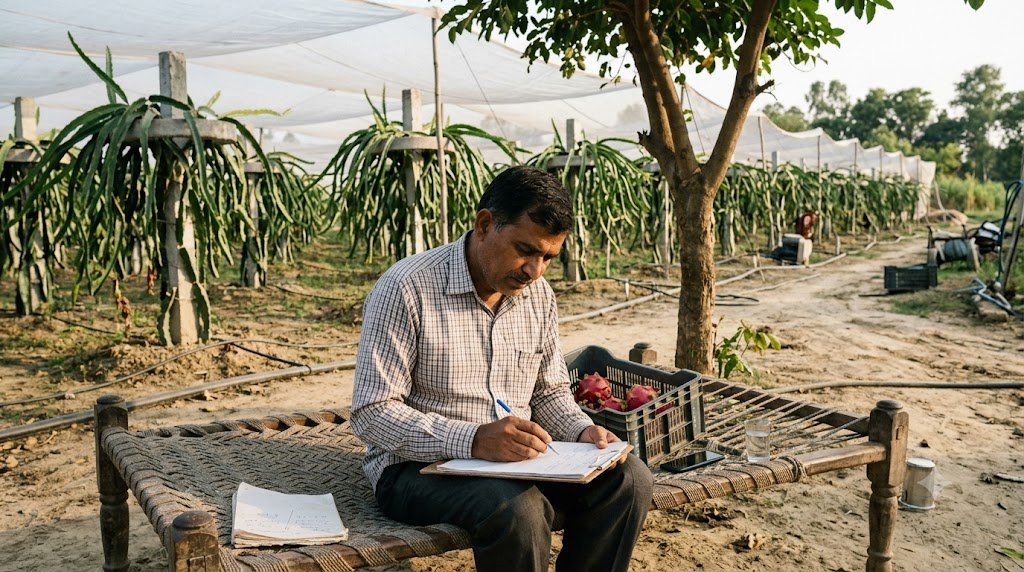
If you grow dragon fruit in the north, you already know that the dragon fruit fruiting season is not a single harvest. It is a long chain of flushes that keeps you busy for nearly six months. Over the years I have learned that dragon fruit farming in North India is less about growing fruit and more about timing it. The farmer who understands the calendar earns more than the farmer who simply grows more.
In this article I will walk you through how the season unfolds from June to November, why prices rise and fall, and how I handle nutrition, buds, insects, fungus and fruit drop along the way. I have kept the language simple, because this is meant to be used in the field, not just read.
How the Dragon Fruit Fruiting Season Works in North India
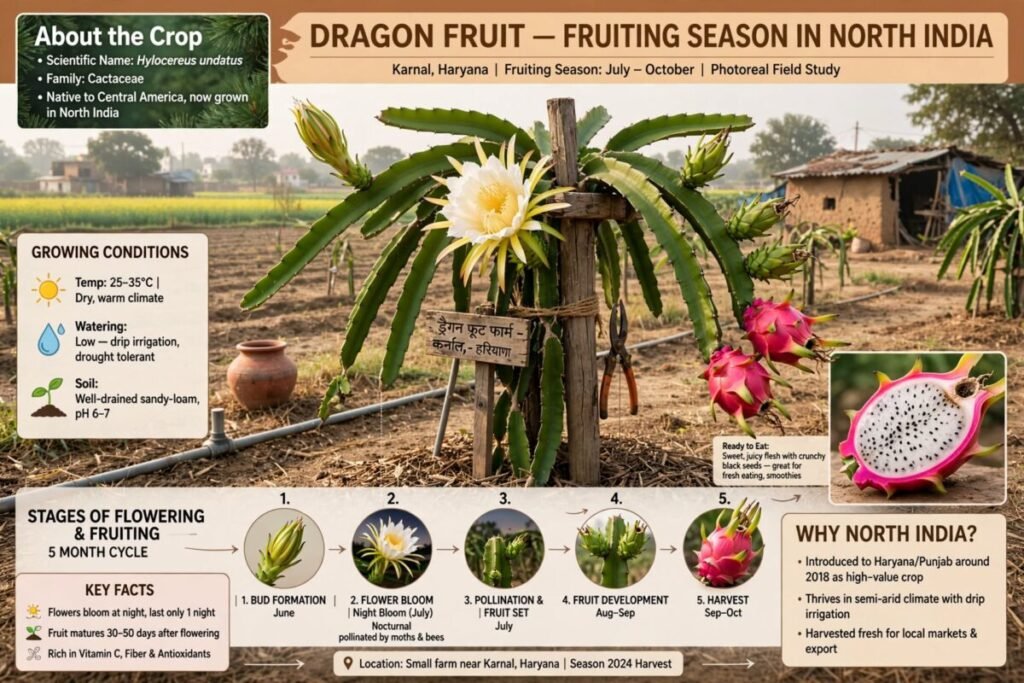
In our region, the dragon fruit fruiting season usually starts in June and continues until November. During this period the plant flowers seven to eight times. Each flowering gives one fruiting wave, and every wave meets different weather. The first one comes in dry summer heat, the middle ones arrive with monsoon humidity, and the last one grows in the cooler nights of autumn.
This is why I never treat the season as one block. Each wave has its own fruit quality, its own market price and its own risks. Good dragon fruit farming in North India means planning for all of them separately.
Quick tip: Write down every flowering date in a simple register. Fruit is usually ready about a month after flowering, and this record saves you from guessing your harvest dates.
The First Wave: Late June Fruit and the Best Rates
The first wave arrives by the end of June. The plants are standing in full summer heat, and honestly this is a stressful time to carry fruit. But it is also the time when the market is almost empty. Very little fruit is available, so buyers pay a premium.
This is the big advantage of dragon fruit farming in North India. Our fruit can reach the market before the rest of the country catches up. I have seen farmers rush this wave and sell half-ripe fruit, and I have seen others hold it too long. The smart approach is to harvest at the right colour stage, pack carefully and sell quickly, either in a good nearby market or directly to customers.
Heat needs some care too. Keep the soil moisture even, use mulch around the base, and protect fruit from direct sunburn if your summers are very harsh. If you get this wave right, it sets the tone for the whole dragon fruit fruiting season.
Monsoon Waves: Why Taste and Price Both Drop
After the first wave comes the rainy-season harvest. This is where many growers get disappointed. The fruit looks big and healthy, but the sweetness is lower. The reason is simple. During rains the plant and the fruit hold more water, so the sugars get diluted.
Price also falls in these weeks because fruit from every part of India reaches the market at the same time. When supply is high, rates come down. This part of the dragon fruit fruiting season tests your patience, and rain is the biggest variable in dragon fruit farming in North India.
Here is what I do during the monsoon waves:
- Reduce irrigation. Rain is already giving the plant more water than it needs.
- Avoid heavy nitrogen. It makes the fruit soft and watery.
- Support the fruit with potash. It helps with firmness and sugar build-up.
- Keep drainage clear. Roots should never sit in standing water.
- Wait for full colour, then sell fast. Rain-fed fruit does not store well.
If the price in the mandi is poor, I would rather sell locally or make pulp and juice than dump fruit at a loss.
The Last Wave: October to November Brings Good Rates Again
The final harvest in October and November is my second favourite after the first wave. By now the rush from other states has slowed down, nights are cooler, and the fruit regains better sweetness. Rates recover, and buyers are happy to pay for good quality.
The only catch is that the plant is tired after months of fruiting. If you did not feed it properly, this last wave will be weak. Dragon fruit farming in North India does not end with the monsoon, and your nutrition plan has to cover the whole dragon fruit fruiting season, not just the beginning.
Nutrition Management for Dragon Fruit Farming in North India
A plant that fruits for six months uses a lot of energy. In dragon fruit farming in North India, nutrition management is what separates a good orchard from an average one.
My approach is simple:
- Before the season (spring): Well-rotted farmyard manure or compost along with balanced NPK, to build a strong base and healthy new growth.
- Before flowering: Phosphorus and boron support bud formation and fruit set.
- During fruit development: Potash and calcium for size, firmness and sweetness. Magnesium and other micronutrients if the plant shows a deficiency.
- Between waves: A light recovery dose so the plant can take the next flush without getting exhausted.
Please do a soil test before you start. I have seen farmers spend heavily on fertilizers that their soil never needed. Exact doses depend on plant age, soil type and local conditions, so check with your nearest agriculture university or KVK before applying.
Selecting the Right Buds for a Better Dragon Fruit Fruiting Season
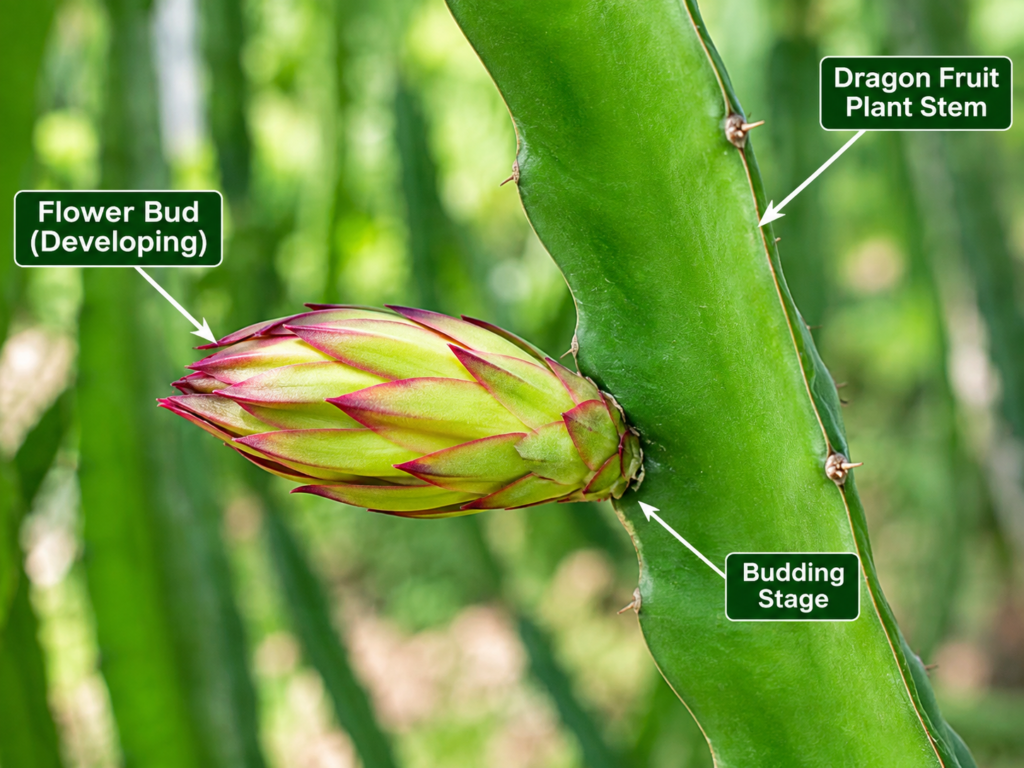
Not every bud deserves to become a fruit. Plants often put out far more buds than they can carry well. If you let all of them grow, the fruit stays small and the plant becomes weak.
I look for buds that are fat, firm and well placed on healthy, mature arms. I remove the ones that are weak, crowded or growing in deep shade. I also try to keep the load balanced across the plant, so one side does not carry everything.
Bud selection feels like losing fruit in the beginning, but it pays you back in size and rate. Big, uniform fruit always sells for more, and this matters in every wave of the dragon fruit fruiting season.
Managing Insects, Fungus and Fruit Drop
None of this is a one-time job. Managing these problems is a daily part of dragon fruit farming in North India.
Insects
Ants, mealybugs and fruit flies are the usual troubles. Ants walk over buds and flowers and also protect mealybugs, so do not ignore them. Birds can peck at ripe fruit as well. I walk through the orchard every week, keep fallen fruit and plant waste cleaned up, use traps for fruit flies, and spray only when I actually see the problem.
Fungus
Humid weather is when fungus attacks. Brown or black spots on stems and fruit, and soft rotting patches, are the common signs. I keep the canopy open with proper pruning, avoid wetting the plant from above, and remove infected parts immediately. A preventive spray of a recommended fungicide or a bio-agent like Trichoderma, as advised locally, works much better than treating after the damage is done.
Fruit drop
Fruit drop worries every grower. The causes I see most often are sudden swings in moisture (dry soil followed by heavy rain), too much nitrogen, low calcium or boron, extreme heat, pest damage and an overloaded plant. The fix is mostly management: keep moisture even, feed in a balanced way, thin the buds and control pests early.
Harvesting and Selling Across the Dragon Fruit Fruiting Season
I harvest roughly 30 to 35 days after flowering, when the skin has turned fully coloured and the wings on the fruit begin to dry slightly. Always use clean secateurs or a knife, harvest in the morning and never pull the fruit by hand. Grade by size so you can ask for a better rate on the best lots.
One more thing about dragon fruit farming in North India: your market is often closer than you think. Nearby cities, tourist towns and direct customers can pay better than a crowded mandi. I follow a simple plan:
- First wave: Premium markets and direct customers.
- Monsoon waves: Quick local sale, or value addition like pulp and juice.
- Last wave: Good rates, so grade properly and sell with confidence.
Never depend on one buyer. Keep two or three options open.
Dragon Fruit Fruiting Season at a Glance
| Wave | Period | Weather | Market | My focus |
|---|---|---|---|---|
| First | Late June | Hot, dry | Highest rates | Heat care, timely harvest |
| Middle | July to September | Rain, humidity | Lower rates | Drainage, potash, fungus control |
| Last | October to November | Cooler nights | Good rates again | Recovery feeding, grading |
Expert Tips for Dragon Fruit Farming in North India
- Plan around the dragon fruit fruiting season, not the calendar year.
- Treat each wave as a separate crop. This is the heart of dragon fruit farming in North India.
- Do a soil test before spending on fertilizers.
- Select buds early. Less fruit of better quality earns more.
- Keep irrigation even. Sudden changes cause fruit drop.
- Inspect weekly and act early on insects and fungus.
- Keep a flowering and harvest record for every wave.
Frequently Asked Questions
When does the dragon fruit fruiting season start in North India?
The dragon fruit fruiting season in North India starts in June and continues until November.
How many fruiting waves are there in dragon fruit farming in North India?
In dragon fruit farming in North India, the plant generally flowers seven to eight times in a season, and each flowering gives one wave.
Why is monsoon dragon fruit less sweet?
During the rainy part of the dragon fruit fruiting season, fruit holds more water, so sweetness drops. Less irrigation and better potash nutrition help.
Which wave gives the best price?
The late June wave usually gets the best rates because the market has very little fruit. The last wave in autumn also does well.
How can I reduce fruit drop?
Keep soil moisture even, avoid excess nitrogen, make sure calcium and boron are not lacking, thin the buds and control pests.
Is dragon fruit farming in North India profitable?
Dragon fruit farming in North India can be profitable if you manage nutrition and timing well and sell smartly. Results depend on your management and market access.
Final Thoughts
The dragon fruit fruiting season rewards the farmer who plans. Harvest the first wave smartly for the premium rate, protect quality through the rains, and feed the plant well so the last wave finishes strong. Dragon fruit farming in North India is not difficult once you understand these rhythms. Start with one thing this season: write down your flowering dates, and you will plan better next time.